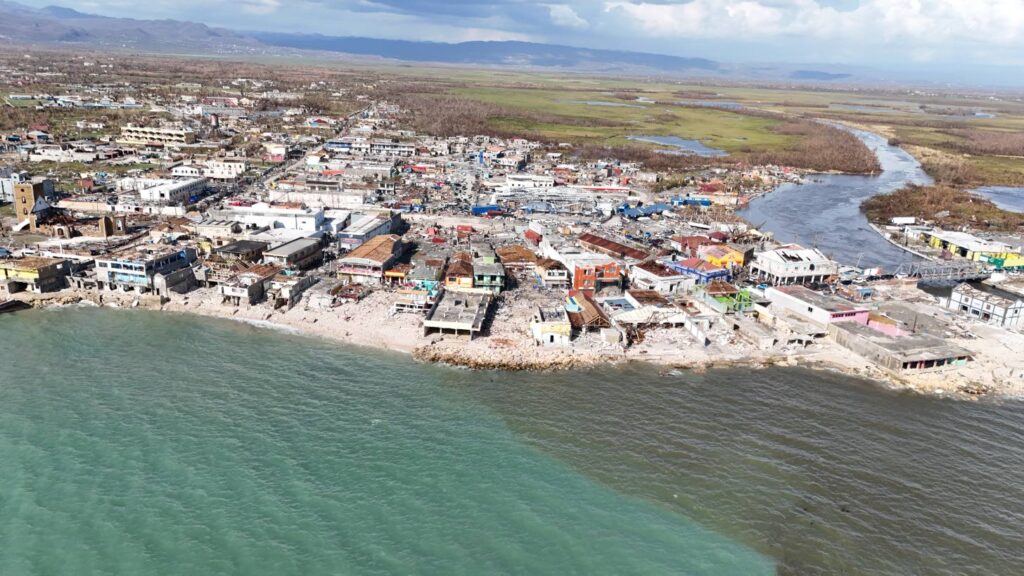
In a significant humanitarian response to Hurricane Melissa’s devastation, the World Food Programme (WFP) has disbursed over $650 million in cash assistance to thousands of affected Jamaicans. This comprehensive relief initiative, executed in collaboration with Jamaica’s Ministry of Labour and Social Security, has already reached approximately 52,000 individuals severely impacted by the Category Five storm that struck in October.
The program represents an evolution from initial emergency measures that distributed food packages to roughly 123,000 vulnerable residents across St Elizabeth, St James, Trelawny, and Westmoreland parishes. Launched on December 18, the cash transfer scheme initially targeted 50,000 beneficiaries but was subsequently expanded to 64,000 due to overwhelming need.
Eligible recipients across six parishes—Hanover, St James, Trelawny, St Ann, Westmoreland, and St Elizabeth—receive $37,000 vouchers distributed through more than 230 Western Union locations island-wide. According to Dana Sacchetti, Head of the WFP Jamaica Satellite Office, the initiative has achieved approximately 80% of its expanded distribution target.
Beneficiary identification occurred through rigorous damage assessments conducted by government agencies and partners, prioritizing households with moderate to complete structural damage, along with elderly and disabled individuals affected by the hurricane. Recipients consistently report the critical timing of this assistance, with many emphasizing how the funds helped bridge financial gaps during market disruptions and job losses when food prices had dramatically increased.
Despite significant progress, distribution challenges persist. Many potential beneficiaries face communication barriers due to ongoing power outages and connectivity issues, while others have relocated entirely since the storm. Some recipients initially questioned the legitimacy of text message notifications due to widespread scam concerns, prompting WFP to implement comprehensive verification systems including community radio announcements, ministry press releases, and physical postings at government offices.
To address accessibility issues, WFP has deployed field teams to deliver secure envelopes to unreachable recipients within two weeks of notification. The program currently maintains an 82% redemption rate, with 80-100 beneficiaries collecting payments daily. The organization aims to match the 95% redemption rate achieved following Hurricane Beryl, which provided cash assistance to 10,500 people.
Beyond direct financial support, WFP has repurposed emergency mobile storage units into temporary classrooms for twelve schools identified by the Ministry of Education. The organization is additionally assessing methods to support the revitalization of school feeding programs across western Jamaica, with ongoing discussions about long-term recovery strategies.
Sacchetti emphasized that while daily life has normalized for many Jamaicans, numerous residents in western parishes continue to face life-altering circumstances months after the catastrophic storm. The WFP remains committed to addressing immediate needs while supporting the Jamaican government in developing sustainable poverty reduction measures and enhancing disaster response capabilities for future climate shocks.