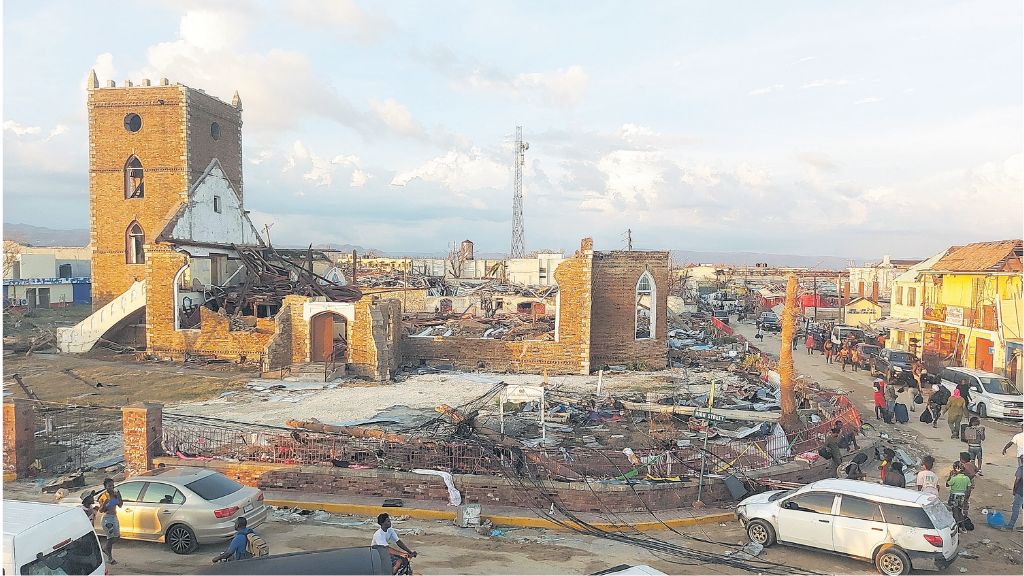
Post-disaster evaluations have definitively established Hurricane Melissa as the most catastrophic natural disaster in Jamaica’s history, both in terms of intensity and economic devastation. The Planning Institute of Jamaica (PIOJ) has released revised figures indicating total damage, losses, and associated costs have reached approximately $2 trillion Jamaican dollars (US$12.232 billion), significantly exceeding earlier projections.
Dr. Wayne Henry, Director General of PIOJ, revealed during a review of economic performance for the October-December 2025 quarter that the Category Five hurricane inflicted damages four times greater than those caused by Hurricane Gilbert in 1988, previously considered the nation’s costliest storm. The updated assessment places the total impact at 56.7% of Jamaica’s 2024 GDP, representing unprecedented economic devastation.
The comprehensive Damage and Loss Assessment (DaLA) was conducted through collaboration between the United Nations Economic Commission for Latin America and the Caribbean and the Jamaican government. The analysis examined three primary sectors: social services, productive industries, and infrastructure.
Social sectors including housing, education, healthcare, and cultural infrastructure suffered the most severe impacts, with final costs reaching $822 billion Jamaican dollars (23.9% of GDP). The productive sector encompassing agriculture, fisheries, tourism, and commerce sustained approximately $792.5 billion in damages (23% of GDP), while infrastructure and environmental damages accounted for nearly 10% of GDP.
PIOJ Deputy Director General Claire Bernard clarified that the revised assessment incorporates elements missing from initial rapid evaluations, including economic losses and repair costs undertaken by residents for temporary recovery. The DaLA report now includes cross-cutting environmental impacts and broader macroeconomic effects, showing total damages of $1.2 trillion, losses exceeding $620.8 billion, and additional costs of $116.8 billion.
The economic consequences have been immediate and severe. Preliminary estimates indicate Jamaica’s economy contracted by 7.5% during the October-December 2025 quarter—the steepest decline since the COVID-19 pandemic’s peak in mid-2020. The goods-producing sector declined by 9.3% while services contracted by 6.9%.
Despite the dramatic downturn, Henry noted the quarterly performance exceeded earlier forecasts of 11-13% decline, reflecting faster-than-expected recovery in some industries and remarkable resilience among businesses and individuals. The economy is projected to contract by 4-6% in the January-March quarter and 1-2% for fiscal year 2025/26, with emerging geopolitical uncertainties posing additional risks to recovery efforts.