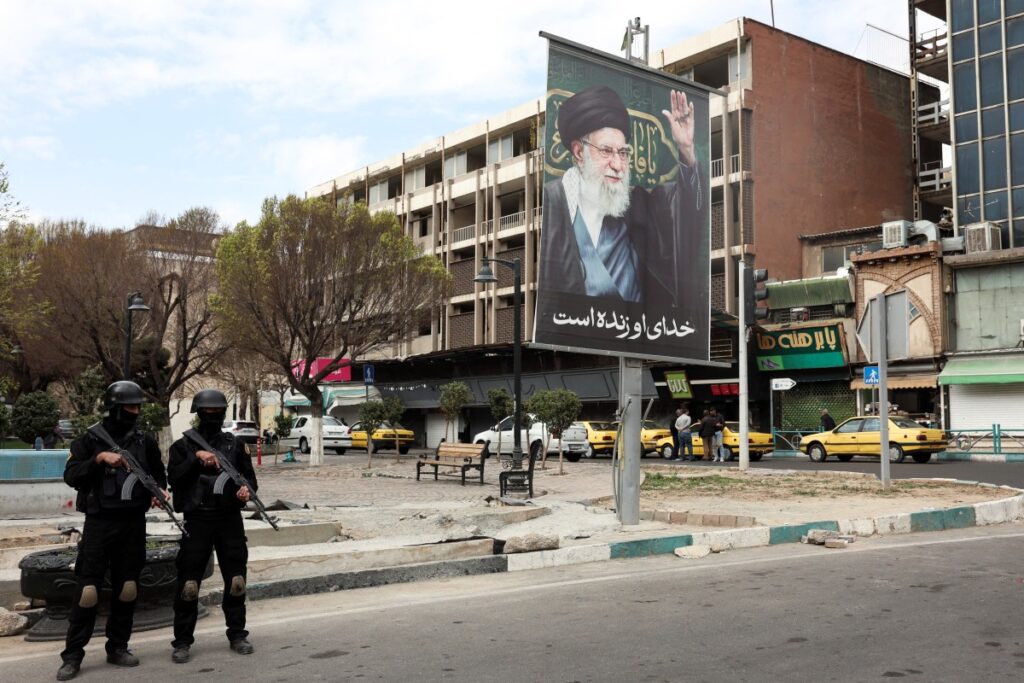
BEIRUT—The Middle East plunged deeper into crisis Monday as military actions initiated by the United States and Israel against Iran triggered widespread regional escalation, drawing Lebanon’s Hezbollah into active combat and threatening global energy markets.
The conflict entered its third day with renewed Israeli strikes on Tehran, where residents reported audible explosions, while simultaneous blasts rocked Beirut. The situation deteriorated rapidly as Gulf monarchies threatened retaliation following attacks on critical infrastructure, including a burning Saudi oil refinery and halted LNG production in Qatar.
General Dan Caine, Chairman of the Joint Chiefs of Staff, announced that US forces had established air superiority over Iran to enable continued operations. Meanwhile, black smoke billowed from the US embassy complex in Kuwait as Iranian forces continued counterattacks in response to the strike that killed Supreme Leader Ayatollah Ali Khamenei and several senior commanders.
The conflict’s human toll mounted as Iranian media reported the death of Khamenei’s 79-year-old wife, Mansoureh Khojasteh Bagherzadeh, from wounds sustained in the initial attack. Tehran resembled a ghost town with many residents fleeing, while those remaining faced scarce supplies and persistent aerial attacks.
The war expanded beyond the Middle East when an Iranian drone struck a UK air force base in Cyprus, prompting evacuations around Akrotiri and Paphos airport. Greece responded by deploying frigates and jets to protect its EU partner nation.
In Lebanon, the violence ignited fresh hostilities between Israel and Hezbollah, with rocket exchanges and Israeli airstrikes killing at least 31 people according to Lebanese authorities. Israel’s army chief Eyal Zamir vowed to deliver a “devastating blow” to Hezbollah, while Lebanon’s Prime Minister Nawaf Salam announced an immediate ban on all Hezbollah military activities.
The strategic Strait of Hormuz became a battleground as three commercial ships were attacked following Iranian warnings, threatening global oil transit routes. International travel faced massive disruptions as regional flight cancellations continued, though Dubai announced partial airport reopenings.
US Defense Secretary Pete Hegseth affirmed commitment to the campaign, stating forces would “go as far as we need to go,” while Iran’s security chief Ali Larijani vowed to defend the nation “regardless of the costs.”