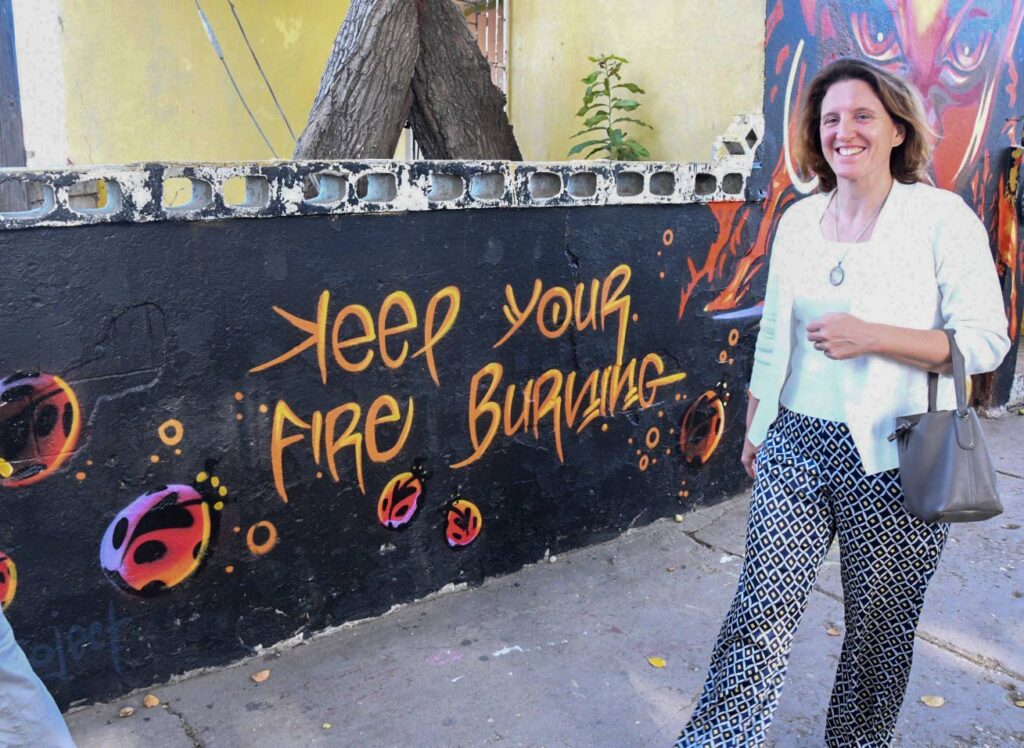
During an official visit to the University of Technology, Jamaica (UTech) on February 8, 2026, Her Excellency Marianne Ziss, France’s Ambassador to Jamaica, explored the renowned Caribbean Sculpture Park. This cultural landmark, inaugurated on December 10, 1999, has attracted diverse visitors through its remarkable transformation from a barren ‘dust bowl’ into an environmentally conscious green space showcasing artistic expressions from Caribbean and international sculptors.
The park’s creation realized the visionary aspirations of several key figures: Pat Ramsay, the university’s inaugural director for the Centre for Arts; David Harrison, former dean of the Faculty of the Built Environment; and the late President Emeritus Dr. Rae Davis.
The visit prompted reflection on France’s global reputation as a vanguard of heritage preservation, notably as headquarters of the International Council of Museums (ICOM). This legacy includes the historic decision during Germany’s invasion of France to surrender without resistance, primarily to protect the nation’s architectural treasures from destruction.
This historical context connects to UTech’s own heritage through its predecessor institution, the Hope Farm School/Jamaica School of Agriculture (1910-1957). Historical records from Veront Satchell’s ‘Hope Transformed: A Historical Sketch of the Hope Landscape’ reveal that during 1916-1917, the entire third-year student cohort enlisted for war service, with numerous staff members similarly volunteering. Despite extensive efforts, the complete roster of these individuals remains undocumented.
Joan Francis, Museum and Heritage Preservation Officer and Lecturer in archival appraisal and access at UTech, expressed regret that Ambassador Ziss was not informed about this significant historical connection, which would have warranted solemn recognition during her visit.