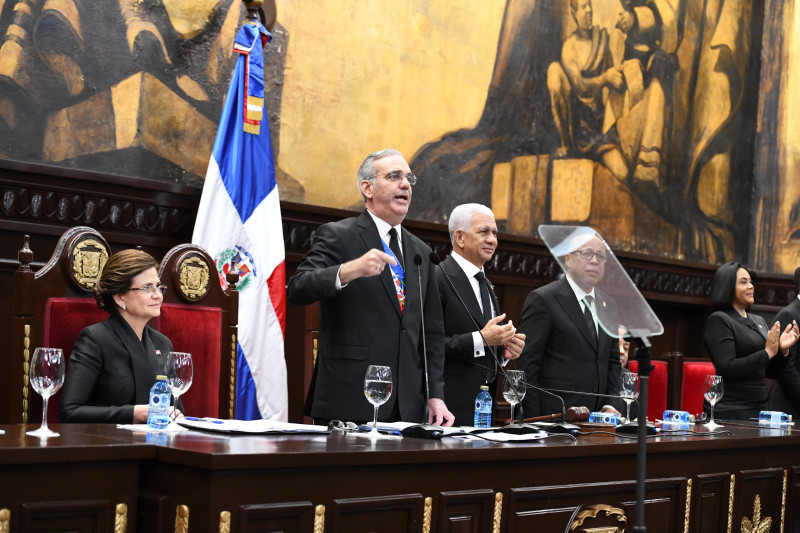
Dominican President Luis Abinader delivered a stark assessment of the nation’s ongoing electricity crisis during his sixth accountability address, acknowledging that systemic power failures have presented a formidable challenge for successive governments, including his current administration. The president confronted the issue head-on, characterizing recent blackouts as “unacceptable” while outlining corrective measures underway.
Substantial capital investments are being channeled into modernizing the national grid, with international engineering firms contracted to enhance system security and operational stability. This strategic move aims to fortify an increasingly complex and diversified power infrastructure that has repeatedly failed to meet national demand.
The most recent nationwide outage occurred Monday morning, triggering widespread disruption across transportation networks including the Santo Domingo Metro and cable car systems. The cascading failure paralyzed daily life for millions of citizens, highlighting the grid’s critical vulnerabilities.
Energy Minister Joel Santos provided technical clarification, noting the incident stemmed from an equipment explosion rather than human error. “This was a breakdown caused by an explosion,” Santos stated, emphasizing the need to investigate both the root cause and the failure’s propagation mechanism through the grid.
The National Interconnected Electric System (SENI) Failure Committee has scheduled a crucial working session for March 11 to present preliminary findings and implement corresponding corrective measures. This development follows a similar November outage that similarly crippled public transportation services, then attributed to unauthorized personnel intervention at the San Pedro de Macorís substation.