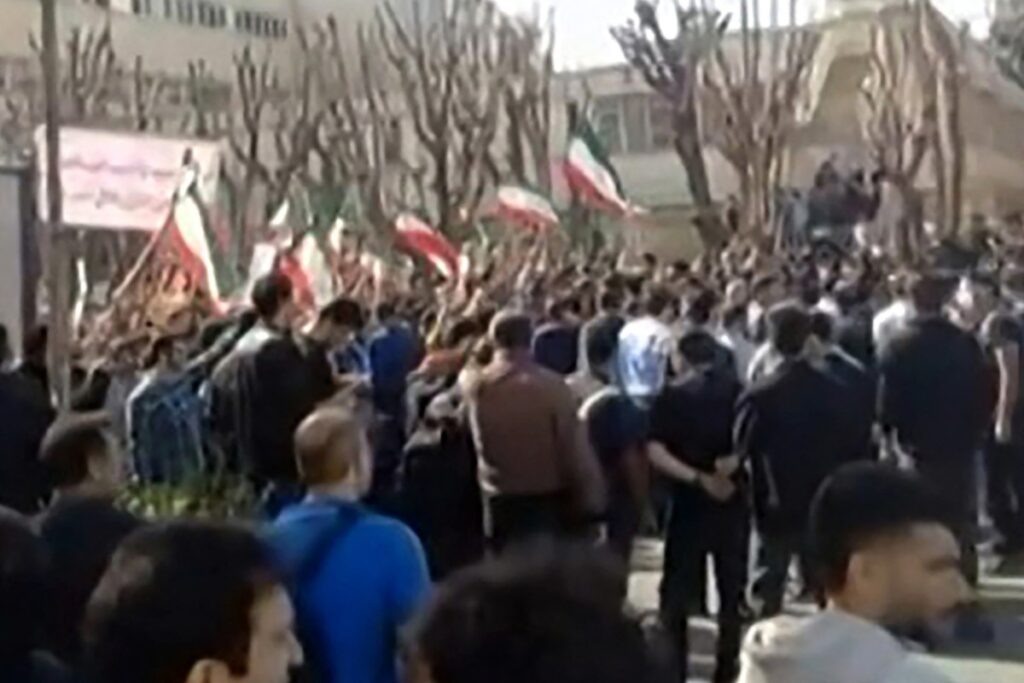
Fresh waves of student-led dissent erupted across Iranian universities on Saturday, marking a significant resurgence of anti-government demonstrations amidst heightened geopolitical tensions. Scuffles broke out between protesters chanting “bi sharaf” (disgraceful) and government supporters, as verified by geolocated footage from Tehran’s premier engineering institution. The Sharif University of Technology similarly witnessed large crowds voicing opposition to the clerical leadership, with reports of injuries emerging from ensuing clashes.
This renewed civil unrest coincides with a precarious diplomatic stalemate between Iran and the United States. While Oman-mediated nuclear negotiations have cautiously resumed, the US has simultaneously orchestrated a substantial military escalation in the region. This strategic pressure campaign includes the deployment of two aircraft carriers—the USS Abraham Lincoln and the en route USS Gerald R Ford—alongside reinforced air defenses and additional warplanes to Middle Eastern bases.
The campus protests serve as a poignant commemoration, occurring on the 40th day since the violent suppression of mass demonstrations in early January. Those initial protests, sparked by economic grievances, evolved into a broad anti-government movement met with a severe crackdown. Iranian authorities acknowledge over 3,000 fatalities, attributing them to “terrorist acts,” though independent monitors like HRANA report death tolls exceeding 7,000, predominantly among protesters.
Diplomatic channels remain active yet fraught. Iranian Foreign Minister Abbas Araghchi indicated Tehran would soon submit a draft nuclear proposal, noting a potential US flexibility on uranium enrichment levels—a claim contrasting with official American statements. President Trump has issued a 15-day ultimatum for a deal, warning of consequences otherwise. This brinkmanship has prompted several nations, including Australia and Sweden, to advise their citizens to depart Iran due to fears of rapid conflict escalation.
Iran’s leadership, including President Masoud Pezeshkian, has vowed defiance against external pressure, emphasizing national resilience against “injustice” and potential attacks. The shadow of previous military engagements, including joint US-Israeli strikes on nuclear facilities, looms over the current standoff, underscoring the high stakes of failed diplomacy.