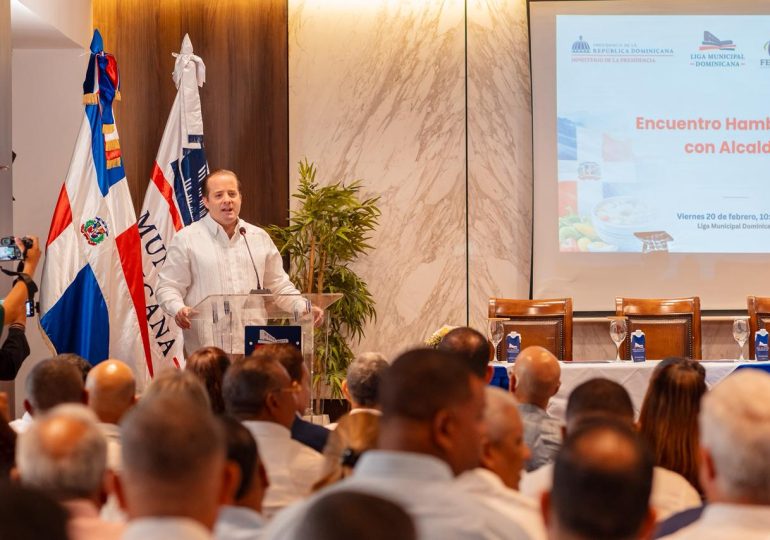
Santo Domingo has launched a significant expansion of its national anti-hunger initiative by formally integrating 120 municipal leaders into its strategic framework. Presided over by José Ignacio Paliza, Minister of the Presidency, the high-level convening at the Dominican Municipal League (LMD) headquarters signifies a pivotal move to decentralize and territorialize the country’s food security agenda, empowering local governments as frontline implementers.
This collaborative model designates mayors as crucial actors in pinpointing high-priority communities, overseeing ground-level interventions, and assessing the efficacy of nutritional programs. Minister Paliza presented compelling data underscoring the nation’s remarkable progress: United Nations Food and Agriculture Organization metrics indicate a drastic reduction in undernourishment, plummeting from 8.7% to 3.6% within a five-year span. This achievement edges the Dominican Republic nearer to the coveted 2.5% benchmark required for international Zero Hunger certification.
Paliza attributed this success to a multi-pronged governmental strategy. Key drivers include the proliferation of economic dining halls, now exceeding 130 nationwide; the reinforcement of the Supérate social aid program, assisting over 1.5 million vulnerable families; substantial wage growth surpassing 30% in recent years; and robust domestic agriculture that fulfills more than 85% of the national food demand.
In a powerful display of local commitment, municipal representatives unanimously vowed to champion this cause. Nelson Núñez, a prominent mayor, outlined plans to embed food sovereignty into core municipal planning, incentivize community gardening projects, and partner in comprehensive vulnerability mapping. Similarly, Víctor D’Aza promised full institutional backing for coordinated planning and monitoring efforts.
To operationalize this alliance, the Ministry of the Presidency will deploy technical assistance to municipalities via the National Council for Food and Nutritional Sovereignty and Security (CONASSAN). Furthermore, a dedicated joint commission, comprising the LMD, the Dominican Federation of Municipalities (FEDOMU), and the Technical Secretariat for Food and Nutritional Sovereignty and Security (SETESSAN), will be established to govern the execution process, monitor key performance indicators, and ensure the initiative yields tangible, measurable outcomes, solidifying the nation’s bid for regional leadership in hunger eradication.