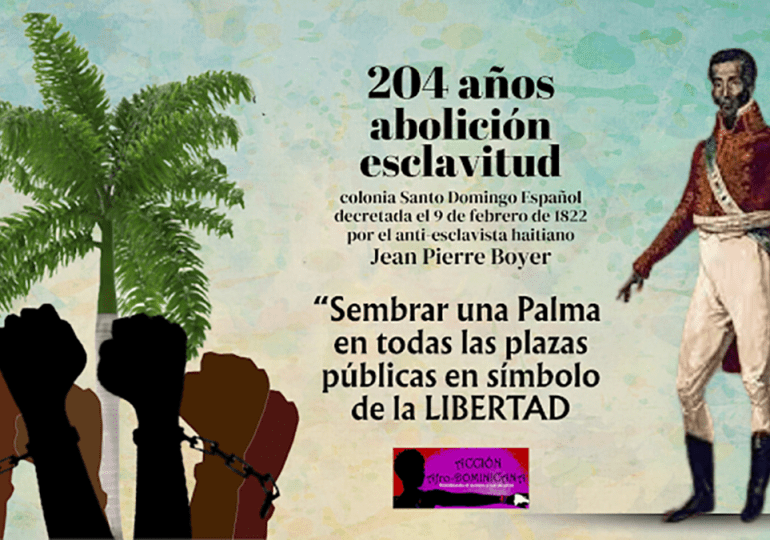
SANTO DOMINGO – Marking the 204th anniversary of slavery’s abolition in Spanish Santo Domingo, the advocacy group Afro-Dominican Action has initiated a powerful digital campaign to challenge what it terms official historical amnesia. Through a series of video statements released on social media, the organization transformed the day into one of both historical remembrance and political protest.
The campaign directly confronts the sustained silence from state institutions regarding February 9th, a date the group champions as foundational to the nation’s anti-colonial narrative and the broader Caribbean struggle for emancipation. This initiative builds upon a formal proclamation issued earlier, in which the organization accused the country’s political and intellectual elites of systematically minimizing and distorting the significance of the 1822 abolition event.
Afro-Dominican Action argues that this erasure has facilitated a national narrative steeped in Hispanophilia and racism, one that deliberately obscures the pivotal role of Afro-descendant resistance movements and the transformative societal impact of abolition. The group has forcefully reaffirmed the date as an indispensable cornerstone in the history of anti-slavery efforts and for Afro-Dominican dignity.
The video series features compelling testimonies from prominent scholars. Dominican writer and researcher Diógenes Abreu drew attention to the Palm of Liberty, a symbol planted by Haitian ruler Jean-Pierre Boyer that has been largely erased from public memory. Historian María Cecilia Ulrickson contested claims of a ‘benign’ or naturally declining slavery system prior to 1822, asserting that the abolition constituted the island’s first genuine act of emancipation. Providing a regional context, U.S. historian Andrew Walker documented how post-abolition Santo Domingo emerged as a critical sanctuary for formerly enslaved people fleeing across the Caribbean.
Concluding its campaign, Afro-Dominican Action emphasized that the legacy of abolition is not a settled historical footnote but a fiercely contested and living memory, especially amidst contemporary struggles against racism and human rights violations. The organization has amplified its longstanding demand for the government, led by President Luis Abinader, to officially designate February 9th as the National Day of the Abolition of Slavery—a call for historical justice echoed by public intellectual Miguel Solano.