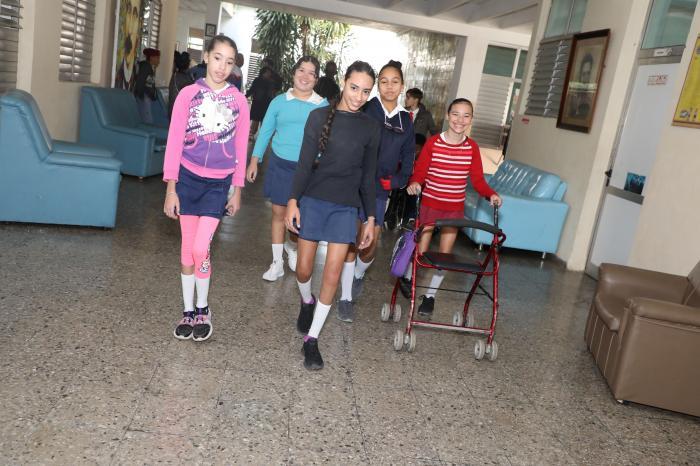
The devastating human impact of the United States’ six-decade economic embargo against Cuba is being felt most acutely by the nation’s most vulnerable population—children with disabilities. Current reports reveal that 538 essential wheelchairs, both electric and conventional, remain unavailable for Cuban children with motor disabilities due to blockade restrictions.
At the Solidaridad con Panamá special education school in Havana, which serves as a rehabilitation center for disabled youth, the consequences of American policy are visibly crippling. Approximately one hundred children were absent from classes recently when three buses failed to arrive—a direct result of transportation shortages caused by the economic siege.
Medical crises are escalating among this vulnerable population. Children with cerebral palsy and progressive muscular dystrophy are experiencing deteriorated mobility because botulinum toxin medications, primarily manufactured in the United States, cannot be reliably acquired. This therapeutic shortage has caused relapses with seizures and loss of walking ability in multiple cases.
Beatriz Roque Morales, Cuba’s National Director of Special Education, detailed how the embargo has forced systemic adaptations: ‘The conditions we have faced for many years, gradually worsening, have compelled us to readjust basic resources in special education schools to maintain quality.’ The crisis affects 331 specialized institutions across the island nation.
The technological isolation extends to educational materials. Braille book production remains prohibitively expensive without access to specialized printers that could efficiently reproduce tactile texts. Teacher development has similarly suffered, with limited access to international platforms that share the latest rehabilitation techniques and research.
Parent Ained García Díaz, whose daughter has cerebral palsy, expressed the collective anguish: ‘We fight for these children to have better quality of life. It’s hard for parents, schools, and teachers when essential resources don’t reach us.’
Despite these challenges, the resilience within Cuba’s special education community remains remarkable. Esther de La O Ochoa, former director of the Solidaridad con Panamá school, emphasized the dedication of educators who persevere through power outages and transportation difficulties: ‘We continue ensuring that children’s smiles are not erased.’
The spirit of resistance is embodied by students like ‘Pelusa,’ a 13-year-old without both hands who declares herself ‘the most intrepid girl’ at her school. Her confidence in Cuba’s unity against external pressure reflects the revolutionary ethos that continues to sustain the nation’s most vulnerable through unprecedented challenges.