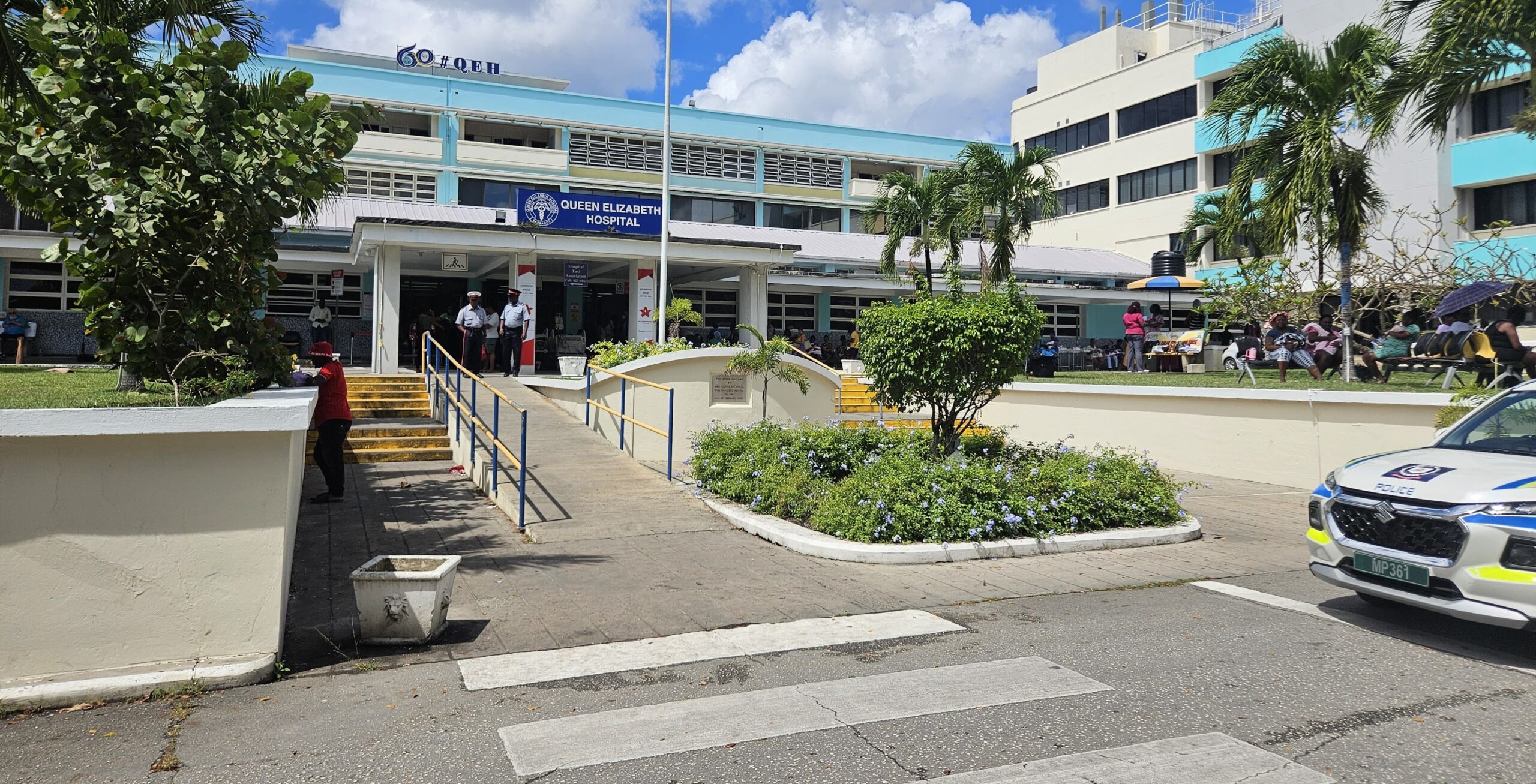
A potentially catastrophic fire at Barbados’ primary public healthcare institution was successfully contained through coordinated emergency response on Sunday morning. The incident at Queen Elizabeth Hospital triggered immediate evacuation protocols, though the swift action of both hospital staff and fire crews prevented serious damage or casualties.
Emergency services received the alert at approximately 10:51 a.m., with firefighting units from Bridgetown Station and Bridgetown Port Station arriving within seven minutes. Upon arrival, they encountered a carefully managed evacuation scenario with patients, including children and newborns, already relocated to exterior areas under staff supervision.
Fire Sub-Officer Henderson Nicholls reported that the blaze originated in Treatment Room One on the C floor, which was undergoing rehabilitation and not actively housing patients. Fire crews deployed two specialized teams to extinguish the flames and conduct smoke extraction operations from adjacent areas.
Preliminary damage assessment revealed limited destruction confined to one air conditioning unit and a single cabinet, though significant soot contamination required extensive cleaning. While the exact cause remains under formal investigation, early indications suggest electrical malfunction as the probable origin.
Hospital communications specialist Shane Sealy confirmed that smoke dissemination presented the primary challenge, traveling beyond the immediate fire zone to affect multiple floors. The institution’s contingency measures prioritized patient safety, resulting in the temporary relocation of individuals from six to seven treatment areas.
Chief Executive Officer Neil Clarke commended hospital personnel for their immediate response, noting that staff had already extinguished the flames and moved patients to secure locations before fire service arrival. The hospital’s virtual incident command room activated within one minute of emergency notification, coordinating the successful management of the situation.
By early afternoon, most patients had returned to thoroughly cleaned wards, with air quality verification ongoing in temporarily relocated sections. Visiting hours experienced minor adjustments to facilitate final cleanup operations, with full normalization expected by late afternoon.