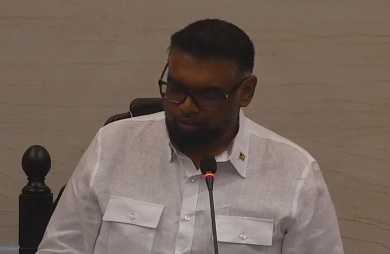
BELMOPAN, Belize – In a powerful address to the Belize Parliament, Guyana’s President Dr. Irfaan Ali issued a compelling call for Small Island Developing States (SIDS) to secure formal representation in global climate change discussions. Speaking during his official three-day visit to the Caribbean Community nation, President Ali emphasized that climate change presents the most urgent existential threat confronting vulnerable island nations across the world.
The Guyanese leader detailed the severe consequences already impacting SIDS, including rising sea levels, intensifying storm systems, prolonged drought periods, and extensive coastal erosion. These environmental crises directly endanger human lives, economic stability, and long-term development prospects for millions of citizens in climate-vulnerable regions.
President Ali presented a transformative vision for SIDS engagement in climate solutions, explicitly rejecting the concept of charitable handouts. Instead, he advocated for market-based approaches that properly value the natural assets these nations protect. “We possess real assets,” President Ali declared. “Our natural resources form part of the global ecosystem that sustains life on Earth, and this value must be appropriately recognized and compensated.”
The president highlighted the exemplary environmental stewardship demonstrated by both Guyana and Belize, noting their critical contributions to global ecosystem services including carbon sequestration, biodiversity protection, and climate regulation. He revealed alarming global statistics, noting that approximately 60% of biodiversity assets have been lost worldwide over the past six decades.
Guyana’s pioneering Climate Biodiversity Alliance and innovative Low Carbon Development Strategy were presented as model approaches. Through jurisdictional carbon credit mechanisms, Guyana has demonstrated that preserved forests generate greater economic value standing than when cleared, creating sustainable revenue streams while maintaining ecological integrity.
President Ali further addressed the interconnected crisis of food security, noting that over 700 million people currently face hunger globally with billions experiencing moderate or severe food insecurity. He praised Caribbean nations for establishing ambitious targets to reduce regional food import bills by 25%, emphasizing the need for sustained agricultural investment, technological adaptation, climate-resilient farming practices, and enhanced agro-processing capabilities.