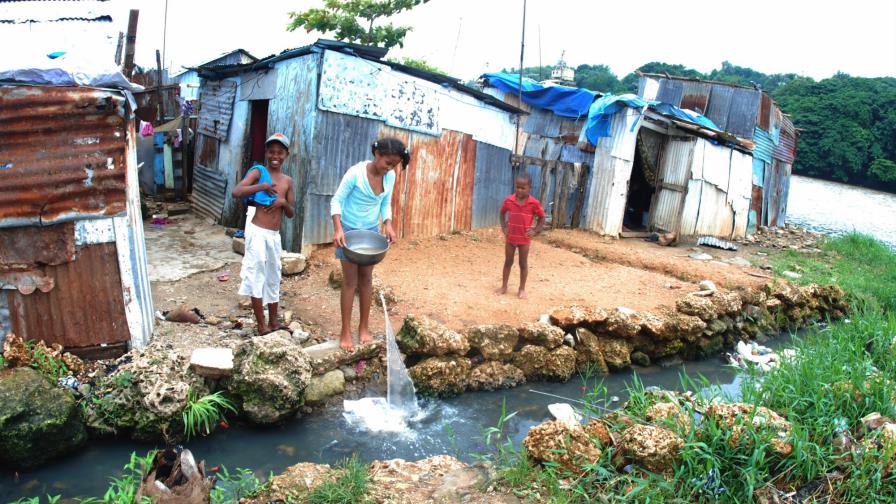
The persistence of dirt-floor dwellings continues to symbolize the profound vulnerability confronting families entrenched in extreme poverty across the Dominican Republic. These substandard living conditions, characterized by pervasive dust and unhygienic environments, pose significant health risks to inhabitants. Compounding these dangers, the frequently inadequate construction materials offer minimal protection against severe weather events and natural disasters.
In a landmark policy decision, the Dominican Government identified the elimination of dirt floors among fifty critical initiatives during its inaugural Council of Ministers session on January 11. This comprehensive poverty alleviation strategy simultaneously targets the phase-out of traditional wood and charcoal stoves, addressing multiple dimensions of housing insecurity.
According to the most recent 2022 National Population and Housing Census, the scale of this challenge has been precisely quantified. Among the nation’s 3,694,060 occupied dwellings, 69,620 residences (1.9%) still maintain dirt floors—with 25,366 located in urban zones and 44,254 in rural communities.
Geographic distribution reveals surprising patterns: despite rapid urbanization, Santo Domingo Province records the highest concentration with 11,409 dirt-floor homes. This exceeds the figures for San Juan (6,010) and Azua (4,277). Conversely, Hermanas Mirabal (304), Santiago Rodríguez (402), and Samaná (649) demonstrate the most significant progress in eliminating these substandard conditions.
Historical comparison with the 2002 census data reveals substantial progress, with nationwide dirt-floor residences declining from 150,123 to current levels—representing a reduction of more than half over two decades.
A multi-sector approach has emerged to accelerate this transformation. Since 2020, the Ministry of Housing and Buildings has implemented the “Change of Dirt Floor for Cement Floor” program, successfully converting 13,905 homes between 2021 and 2024. Simultaneously, humanitarian organization Habitat for Humanity contributed to replacing 530 dirt floors with polished cement surfaces in the latter half of 2023, with ambitious plans to address 1,888 additional households throughout 2024.