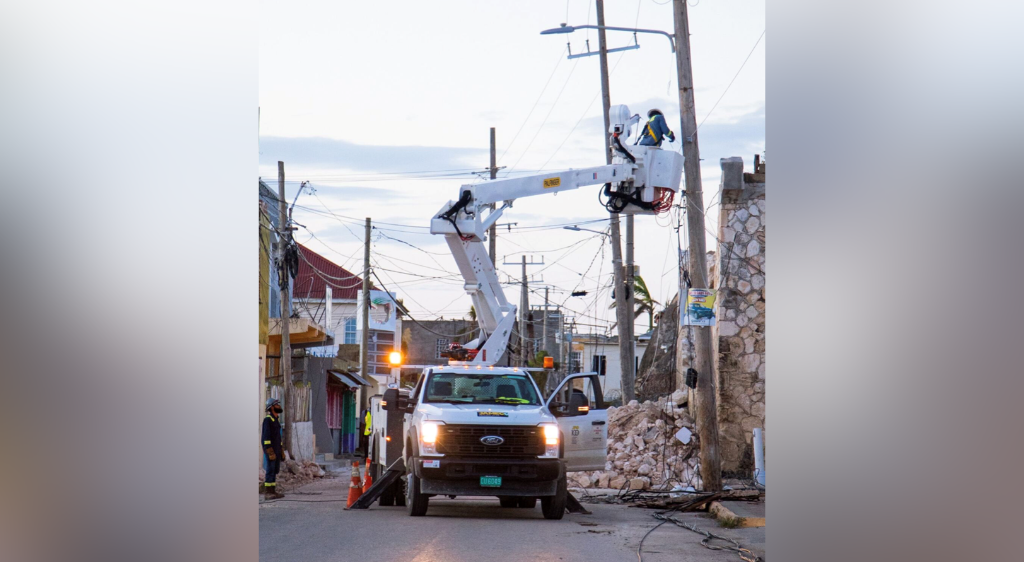
Jamaica’s primary electricity provider, Jamaica Public Service (JPS), has announced significant progress in restoring power across the island, achieving 96% customer connectivity ahead of its January 31st target. The utility company confirmed it has entered the final phase of restoration operations following October’s devastating Category 5 Hurricane Melissa.
This concluding stage presents substantial technical challenges, requiring complete redesign and reconstruction of severely damaged infrastructure in remote areas with difficult terrain. JPS emphasized that restoring power to smaller, scattered customer clusters demands intensive resources and specialized expertise.
The remarkable recovery progress reflects the dedicated efforts of JPS technical crews supplemented by regional and international line workers. Company leadership highlighted that strategic coordination with multiple stakeholders proved instrumental in overcoming obstacles. Collaborative engagement with political representatives, business community members, utility partners, and affected customers facilitated critical access, priority alignment, and expectation management throughout the restoration process.
Recent advancements within the past 48 hours include successful re-energization of numerous communities across multiple parishes:
• Westmoreland: Critical services including Whithorn Police Station and courthouse, plus FLOW and Digicel cellular sites, alongside residential areas in Dunbar River, Deans Valley, and Little London
• St James: Key infrastructure restoration encompassing NWC Pumping Station, educational facilities like Mount Horeb All Age & Infant School, and telecommunications infrastructure
• St Elizabeth: Institutional facilities including Bethlehem Moravian College and Malvern Police Station, plus surrounding communities
JPS maintains mobilized crews across the island working to restore electricity safely and expeditiously. Meanwhile, the company has established temporary energy hubs in affected communities, providing residents with essential power access for device charging, internet connectivity, and other critical services during the final restoration period.