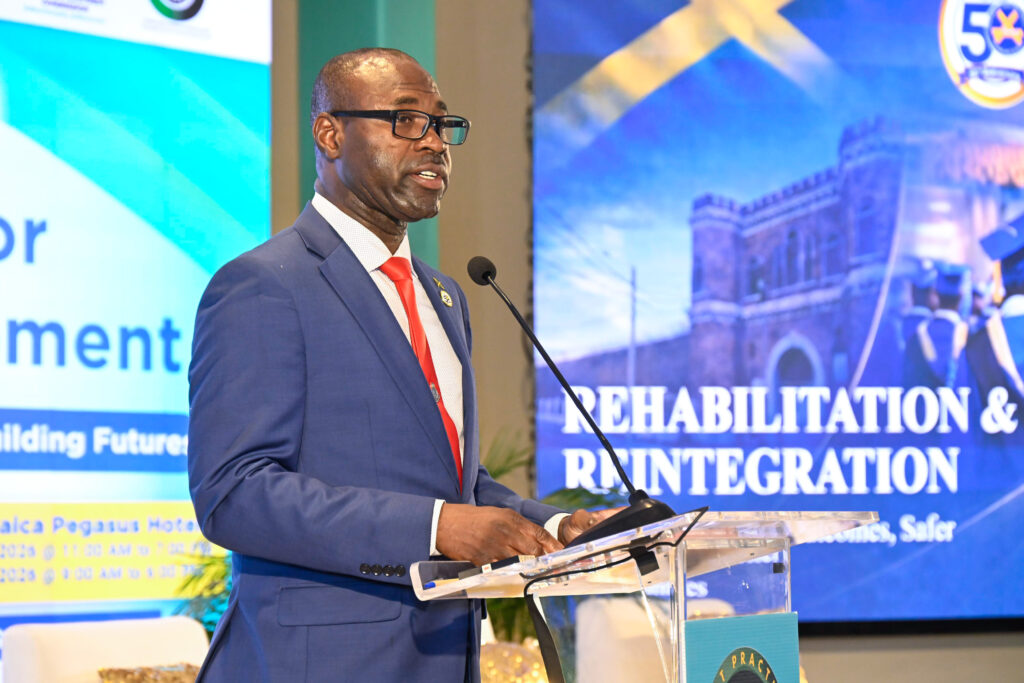
KINGSTON, Jamaica — Jamaica’s Department of Correctional Services (DCS) is executing a comprehensive modernization strategy focused on transforming institutional infrastructure and security protocols to elevate rehabilitation standards for incarcerated individuals. Commissioner noted this initiative during his address at the Planning Institute of Jamaica (PIOJ) 10th Best Practice Symposium for Social and Community Renewal on January 28.
The commissioner emphasized that rehabilitation begins immediately upon intake, with enhanced physical environments serving as foundational to educational advancement, skills acquisition, and personal development. “Our commitment to humane treatment extends to improving the physical environment where rehabilitation occurs,” he stated, announcing an upcoming media tour to showcase these transformations publicly.
Substantial upgrades have been applied to critical facilities including classrooms, vocational workshops for tailoring and welding, computer laboratories, and inmate radio stations. These improvements are designed to meet professional benchmarks equivalent to national training institutions and HEART/NSTA Trust standards. “These are deliberate enhancements creating dignified, structured spaces for meaningful rehabilitation,” Commissioner Mason affirmed.
A significant outcome of this initiative will be the launch of an online store featuring products crafted by offenders, advancing institutional self-sufficiency and inmate earning potential. Concurrently, the DCS is reinforcing security through state-of-the-art full-body and bag scanners at all facilities, plus a specialized gate management team to standardize procedures and enhance vigilance during critical hours.
The department is also implementing dynamic inmate reclassification processes that support appropriate work placements and enable qualified individuals to transfer to lower-security institutions. This evidence-based approach tailors interventions to individual risk levels, accounting for literacy, mental health needs, and learning styles to maximize rehabilitation efficacy.