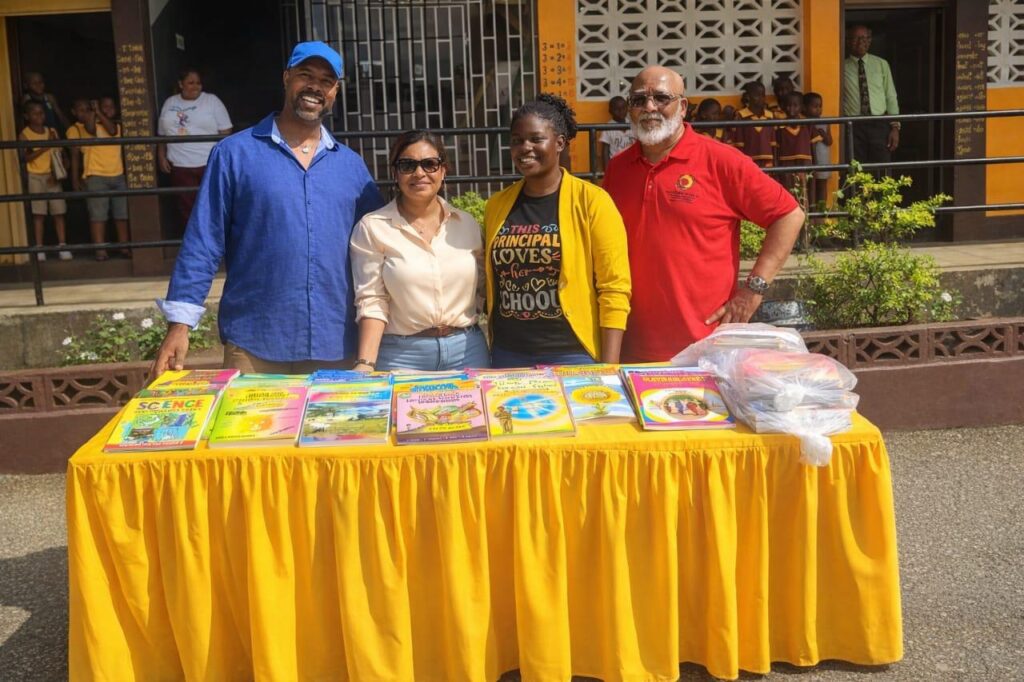
Jamaican-American philanthropist Dr. Laxley Stephenson is spearheading a significant educational recovery effort across hurricane-affected regions of Jamaica through his organization, Global Humanity Network Incorporated (GHN). The nonprofit’s ‘Beyond the Book Bag’ initiative has now reached 135 students islandwide, with recent distributions serving 85 additional students across Westmoreland and St Elizabeth parishes.
The expansion follows GHN’s initial December deployment in Trelawny, where 50 students received comprehensive educational support after Hurricane Melissa destroyed critical learning materials. The latest phase provided complete textbook sets and essential supplies to 60 Westmoreland students and 25 in St Elizabeth, representing 20 educational institutions across both parishes.
Dr. Stephenson, GHN’s President and CEO, emphasized the strategic nature of the intervention. ‘Our response transcends conventional charity,’ he stated. ‘While addressing immediate textbook shortages through approximately $1 million in distributed materials, we’re simultaneously launching a three-year mentorship framework designed to create sustainable educational pathways.’
The initiative has garnered enthusiastic support from educational leaders. Nerissa Stevens, Principal of Little London Primary School, reported that GHN exceeded initial commitments by providing materials for 19 students instead of the planned nine. ‘This intervention directly addresses classroom instructional gaps,’ Stevens noted. ‘Recipients span our entire educational spectrum, from early childhood through sixth grade.’
Concurrently, GHN is undergoing a strategic transformation from charity-focused operations to capacity-building development. The organization unveiled a 2026-2029 roadmap establishing a structured pipeline beginning with immediate relief (‘Helping Hands’), progressing through mentorship programs (‘Mentoring Matters’), and culminating in long-term educational investments (‘Beyond the Backpack’).
The phased implementation will establish student cohorts and tracking systems in 2026, expand partnerships in 2027, and scale the model regionally through 2029. Professor Stephenson characterized this evolution as ‘elevating charity into a strategy for building futures,’ anticipating outcomes including strengthened youth leadership, reduced aid dependency, and self-sustaining community development.