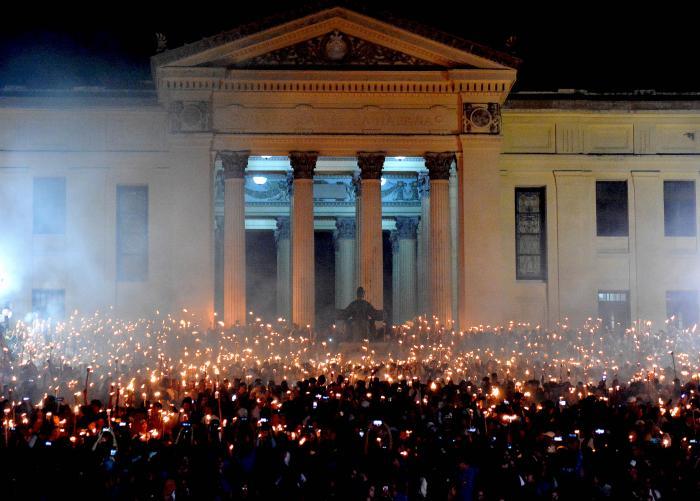
HAVANA – The historic Torch March, a century-old tradition symbolizing Cuba’s anti-imperialist resistance, once again transformed Havana’s streets into a flowing symphony of light on Tuesday evening. This annual ritual represents more than mere ceremony—it embodies the materialization of countless personal commitments coalescing into a powerful public declaration.
The procession originates not in organized spectacle but in private dedication. Each torch is first kindled in imagination before being physically constructed in courtyards, workshop tables, and homes across the city. This initial spark evolves into a manifestation of collective will transformed into radiant light, where personal conviction merges with common purpose to create what participants describe as ‘a geography of warmth and purpose.’
As darkness recedes before the advancing tide of flames, the night accepts the ritualistic progression. The march serves as both symbolic gesture and active declaration—a testament to the principles and courage of previous generations honored through this tradition. Participants emphasize that the significance lies not merely in carrying torches but in forming the tightly-knit community marching beneath their glow, sharing in their radiant, inviting warmth.
Confronting what organizers characterize as ‘the old enemy threatening the homeland,’ the event symbolizes the ongoing struggle requiring both illuminating and purifying fire. The march incorporates the anti-imperialist ideology of Cuba’s founding fathers into living tradition, creating a space of pure presence where beauty manifests and becomes embedded in the city’s collective memory.
While the grandiose image of an illuminated crowd creates powerful imagery, participants suggest the most enduring aspect may be the sequential lighting of torches—passing flame from friend to neighbor, ensuring nothing extinguishes along the route. The night’s testimony becomes generational certainty: like hope itself, the fire persists.