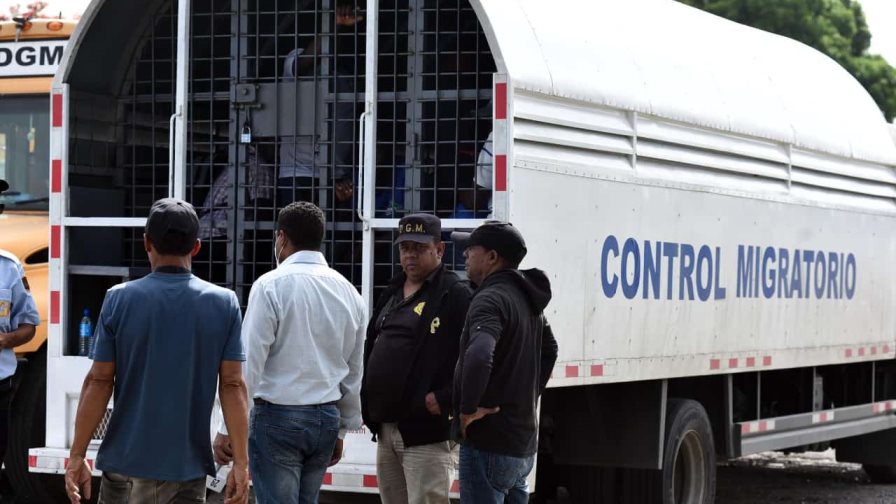
In a sweeping nationwide enforcement action, Dominican migration authorities conducted a large-scale interdiction operation targeting irregular migration in the early hours of January 23. The General Directorate of Migration (DGM) reported the detention and/or deportation of 2,697 Haitian nationals found in violation of the country’s immigration statutes.
The operation demonstrated significant coordination across multiple regions, with 1,222 individuals promptly repatriated through designated border checkpoints. The geographic distribution of these returns revealed concentrated activity in key border regions: Elías Piña (618), Dajabón (441), Jimaní (85), and Pedernales (78).
Simultaneous enforcement sweeps resulted in the apprehension of 1,258 undocumented migrants across diverse operational theaters. In Greater Santo Domingo, operations targeted the districts of Villa Mella, Herrera, Villa Duarte, and the National District. The Cibao region witnessed coordinated actions in Santiago, Mao, Hermanas Mirabal, Monseñor Nouel, and Santiago Rodríguez, while southern operations focused on Barahona, Azua, and San José de Ocoa.
Tourist zones received particular attention, with 217 foreign nationals detained in La Altagracia and La Romana provinces alone. These operations concentrated on high-traffic tourist destinations including Bávaro, Verón, and Uvero Alto, plus adjacent communities, through joint deployments combining military and police resources.
The operational framework involved 38 rapid response agents, seven intelligence officers, inspectors, drivers, and armed forces personnel collaborating to enforce migration control in areas experiencing substantial population mobility.
Authority involvement was distributed across multiple agencies: DGM agents directly apprehended 1,095 individuals, while military and police units accounted for 380 detainees—291 by the Army, 45 by the Specialized Corps of Land Border Security (Cesfront), and 44 by the National Police.
The DGM emphasized in an official communiqué that all operations were conducted with strict adherence to human rights protocols and existing regulatory frameworks, while reaffirming institutional support for national security apparatuses.