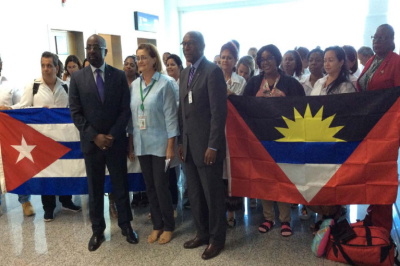
The Government of Antigua and Barbuda has finalized an agreement to recruit 120 nursing professionals from Ghana, scheduled to arrive in January 2026, while simultaneously maintaining its longstanding healthcare partnership with Cuba despite mounting pressure from the United States to terminate the arrangement.
Health Minister Sir Molwyn Joseph confirmed the Ghanaian nurses will be strategically deployed across the Sir Lester Bird Medical Centre, community health clinics, and educational institutions to strengthen both hospital and community-based healthcare services. This initiative represents a significant expansion of the nation’s healthcare workforce aimed at improving service delivery and alleviating pressure on existing medical staff.
Communications Director Maurice Merchant clarified that the new recruitment does not signify termination of the Cuban health program, describing the Cuba-Antigua medical collaboration as ‘currently going through a period of transition.’ He emphasized the government’s appreciation for Cuba’s historical contributions to the national healthcare system while dismissing speculation about the program’s discontinuation as politically motivated attempts to ‘muddy the waters’ between Cuba and the United States.
The government’s dual approach includes both international recruitment and domestic capacity building, with 15 local nurses recently receiving scholarships to pursue master’s degrees at the University of the West Indies Five Islands Campus. Merchant acknowledged the challenge of retaining highly-trained Antiguan nurses who frequently accept better-compensated positions in North American and European healthcare systems.
This development occurs against the backdrop of intensified US diplomatic pressure characterizing Cuba’s medical missions as ‘exploitative labour practices.’ The US Embassy in Barbados issued a statement condemning what it described as a ‘modern-day forced labour scheme’ where the Cuban government allegedly retains 80-95% of medical professionals’ salaries while charging recipient nations premium rates. The US government has urged Caribbean nations to terminate these arrangements, asserting they represent financial burdens on local taxpayers and ethical violations of medical workers’ rights.
The Antiguan government maintains its sovereign right to determine its healthcare partnerships while working toward long-term self-sufficiency in medical staffing, balancing immediate healthcare needs with diplomatic considerations in the complex geopolitics of Caribbean medical cooperation.