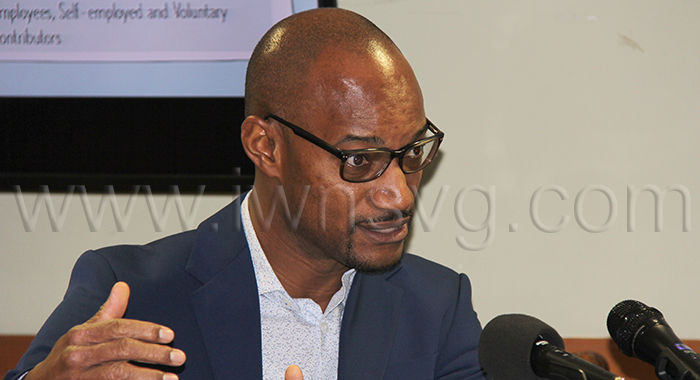
Stewart Haynes, Executive Director of St. Vincent and the Grenadines’ National Insurance Services (NIS), has called for a comprehensive national dialogue regarding the potential implementation of National Health Insurance (NHI), urging policymakers not to dismiss the initiative without thorough examination.
The newly elected New Democratic Party (NDP) administration, which assumed power on November 27, has committed to establishing NHI as a key policy priority. This represents a significant policy reversal from the previous Unity Labour Party government, which had deemed the healthcare initiative financially unfeasible.
Speaking during a Boom FM interview commemorating NIS’s 39th anniversary, Haynes drew historical parallels between current NHI skepticism and similar reservations expressed about the national insurance system when it was first introduced in the mid-1980s. The seasoned actuary revealed he has already engaged in preliminary discussions with Prime Minister and Finance Minister Godwin Friday regarding NHI implementation frameworks.
“The Prime Minister presented a compelling policy narrative during our meeting,” Haynes noted. “I subsequently raised several critical considerations including benefit structures, demographic factors, and economic implications that must inform any NHI framework.”
Emphasizing that he was expressing personal views rather than official NIS positions, Haynes recommended establishing a specialized steering committee to reassess two-decade-old feasibility studies that require updating given contemporary demographic and economic realities. He referenced regional precedents, noting Grenada’s previous assessment without implementation and St. Kitts and Nevis’s ongoing NHI deliberations.
The insurance executive outlined a methodical approach beginning with defining clear policy objectives: “We must first determine whether we prioritize quality enhancement, accessibility expansion, or affordability improvement. Subsequent strategies must then align with these established goals while accounting for demographic and economic constraints.”
Haynes stressed the necessity of maintaining strict financial separation between NIS and potential NHI funds while strengthening governance mechanisms. He proposed a phased implementation approach, suggesting initial focus on administrative structure development before addressing financing mechanisms.
Regarding previous cost concerns raised by former Prime Minister Ralph Gonsalves, Haynes noted that expense projections are directly tied to benefit packages: “Cost evaluations must correspond to specific coverage parameters. Blanket dismissals based on outdated assessments preclude informed decision-making regarding potentially viable scaled implementations.”
Haynes concluded that technocrats should provide evidence-based guidance regarding implementation feasibility once clear policy objectives are established, emphasizing that customized solutions rather than one-size-fits-all approaches characterize successful NHI systems worldwide.