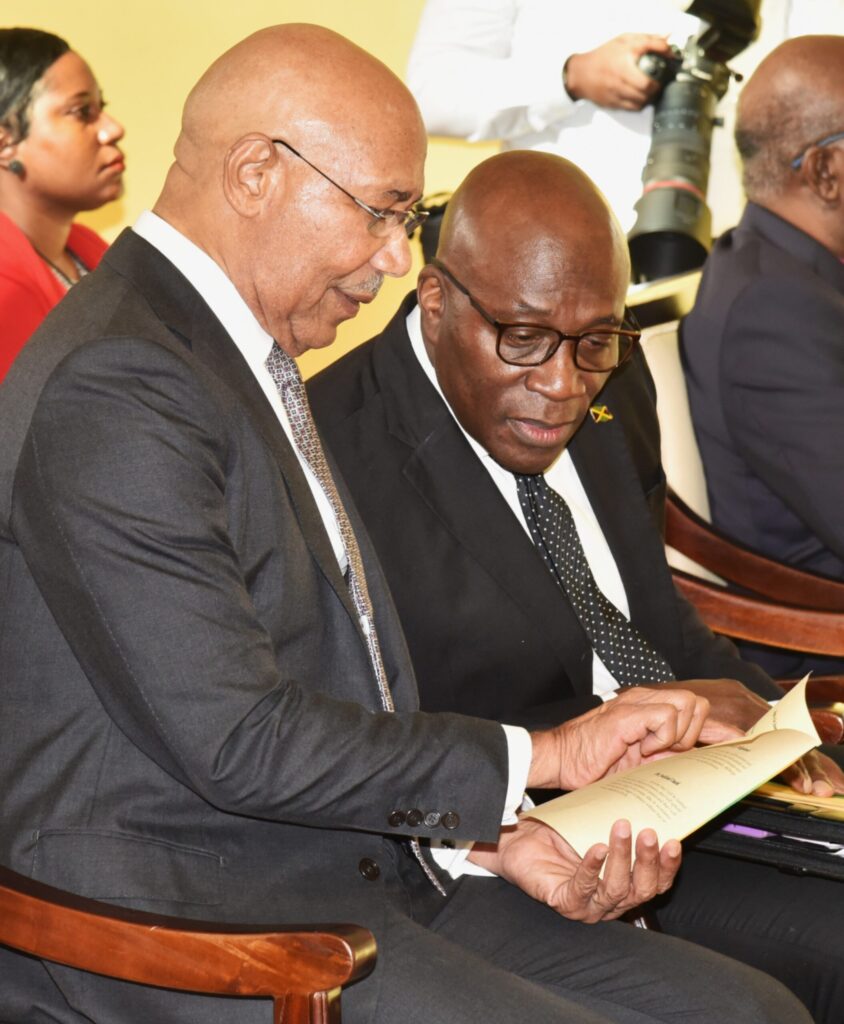
KINGSTON, Jamaica — The Jamaican judicial system is demonstrating significant progress in case management and operational efficiency, according to Chief Justice Bryan Sykes. Speaking at a recent swearing-in ceremony for six newly appointed judicial officers at King’s House, Justice Sykes highlighted several key achievements and ongoing reform initiatives.
The parish courts have maintained exceptional performance levels despite facing substantial challenges, including inadequate physical infrastructure and disruptions caused by Hurricane Melissa. Notably, these courts have successfully reduced their net case backlog to under three percent, even with a tightened time standard of 20 months for case resolution.
Justice Sykes reported that the Court of Appeal continues to excel regionally, delivering an impressive 56 judgments for every 10 cases reserved. This performance metric establishes Jamaica’s appellate court as one of the most efficient within the Caribbean region.
Substantial structural reforms are underway at the Supreme Court, particularly within the civil registry system. With support from the Ministry of Finance, the judiciary is implementing a docket system that will organize judges, masters, and administrative staff into specialized teams. This reorganization will assign each team responsibility for cases from initial assignment through final disposition, creating greater accountability and streamlined processing.
In a landmark development, multiple judicial entities including the Court of Appeal, the High Court Division of the Gun Court in Kingston, the St. Thomas Parish Court, and the Court Administration Division are expected to receive ISO certification within approximately twelve weeks. This certification will establish measurable service standards and enhance accountability throughout the judicial process.
Justice Sykes simultaneously called for comprehensive reforms to address systemic challenges. He identified the circuit court system as inadequate for handling modern case volumes and complexities, noting that ‘there is no such thing as a simple case anymore.’ The four-week circuit court sessions, even with highly efficient judges, prove insufficient for addressing complex evidentiary matters.
The Chief Justice advocated for reevaluating jury trials, citing international precedents. He referenced England and Wales, where officials are considering curtailing jury trials to address a massive backlog of 78,000 cases projected to reach 100,000 by 2030. Similarly, he pointed to the United States federal system, where over 97% of cases are resolved through plea bargaining.
With Jamaica facing approximately 3,000 backlogged cases—over 1,000 concentrated in the Home Circuit Court alone—Justice Sykes urged the Office of the Director of Public Prosecutions to develop positions for case resolution in every matter. He emphasized that trying all cases conventionally is impossible and previously discussed reform necessities with the justice minister.
Finally, Justice Sykes called for increased judicial control over capital budgeting to better address the system’s operational needs and modernization requirements.