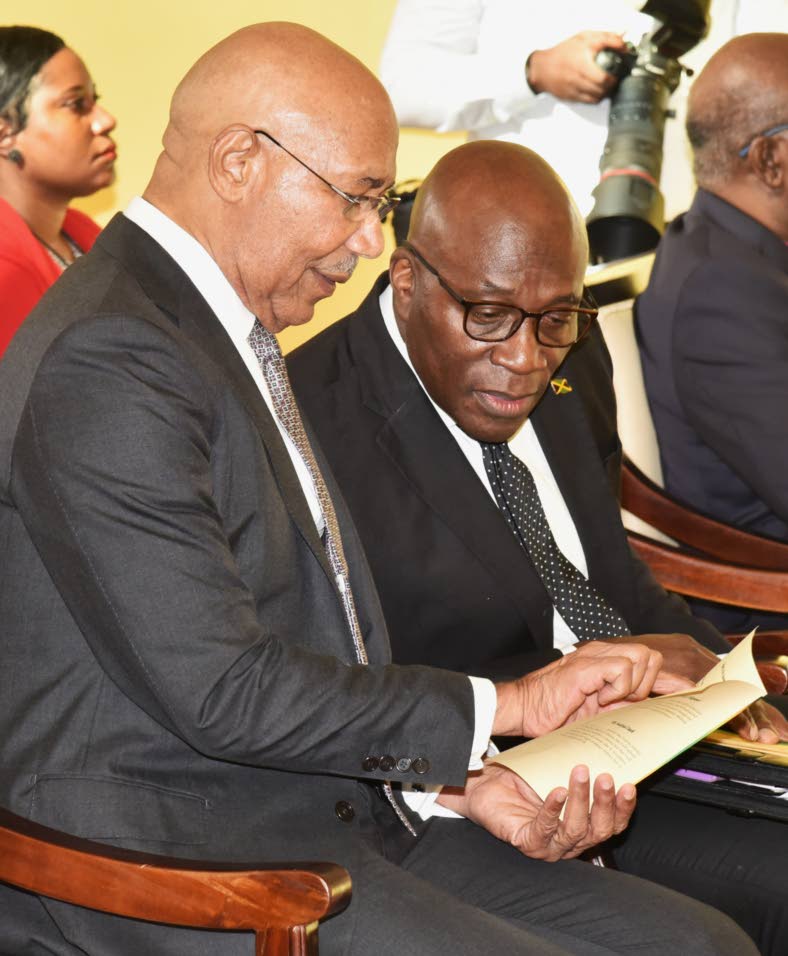
In a striking address during Monday’s judicial swearing-in ceremony at King’s House in St. Andrew, Chief Justice Bryan Sykes delivered a blistering critique of Jamaica’s deteriorating court infrastructure and systemic inefficiencies plaguing the justice system. Speaking with unusual candor, Justice Sykes challenged the island’s political leadership to experience firsthand the substandard working conditions that judges and court staff endure daily.
The Chief Justice pointedly remarked that aside from the recently refurbished Court of Appeal building in downtown Kingston, no Jamaican court facility meets standards that Justice Minister Delroy Chuck or Permanent Secretary Grace Ann Stewart McFarlane would willingly occupy. Drawing on biblical principles of reciprocity, Sykes emphasized that those allocating resources should consider whether they themselves would work under such conditions.
Despite these challenges, Sykes highlighted extraordinary efforts by judiciary personnel, particularly at Kingston’s Traffic Court, where judges have been working evenings until 8:00 or 9:00 PM and weekends to eliminate case backlogs. Their dedication has positioned the Traffic Court to become ‘backlog-free’ for the first time in memory—a remarkable achievement given the facility’s limitations.
The Chief Justice revealed that expansion plans for the South Camp Road court building had been halted after engineers discovered the existing structure couldn’t support an additional floor. He warned that temporary accommodations consistently become permanent solutions, citing the Family Court in western Jamaica where staff who joined fresh from high school have now reached retirement age while still operating from a plaza.
Budgetary autonomy emerged as a central concern, with Sykes questioning why the justice ministry maintains control over significant portions of the judiciary’s budget despite earlier promises of reform. This control affects practical matters like power supply, where the ministry’s insistence on solar power alone—without backup generators—ignores practical realities demonstrated during Hurricane Melissa last October, when generators proved essential after solar panels sustained damage.
Despite these systemic challenges, Sykes celebrated the judiciary’s achievements: parish courts maintain under three percent net backlog, the Court of Appeal delivers 56 judgments for every 10 reserved, and structural reforms are underway in Supreme Court registries with Finance Ministry support. These changes will implement a docket system where judges, masters, and staff work in dedicated case management teams.
The ceremony saw several judicial promotions: Justices Lorna Shelly Williams and Caroline Tie Powell to act as Court of Appeal judges; Chief Parish Court Judge Chester Crooks and Judge Kamar Henry Anderson to act as Supreme Court puisne judges; and Christine McNiel and Yvette Miller appointed acting masters-in-chamber. These acting positions extend through March 27, 2026.