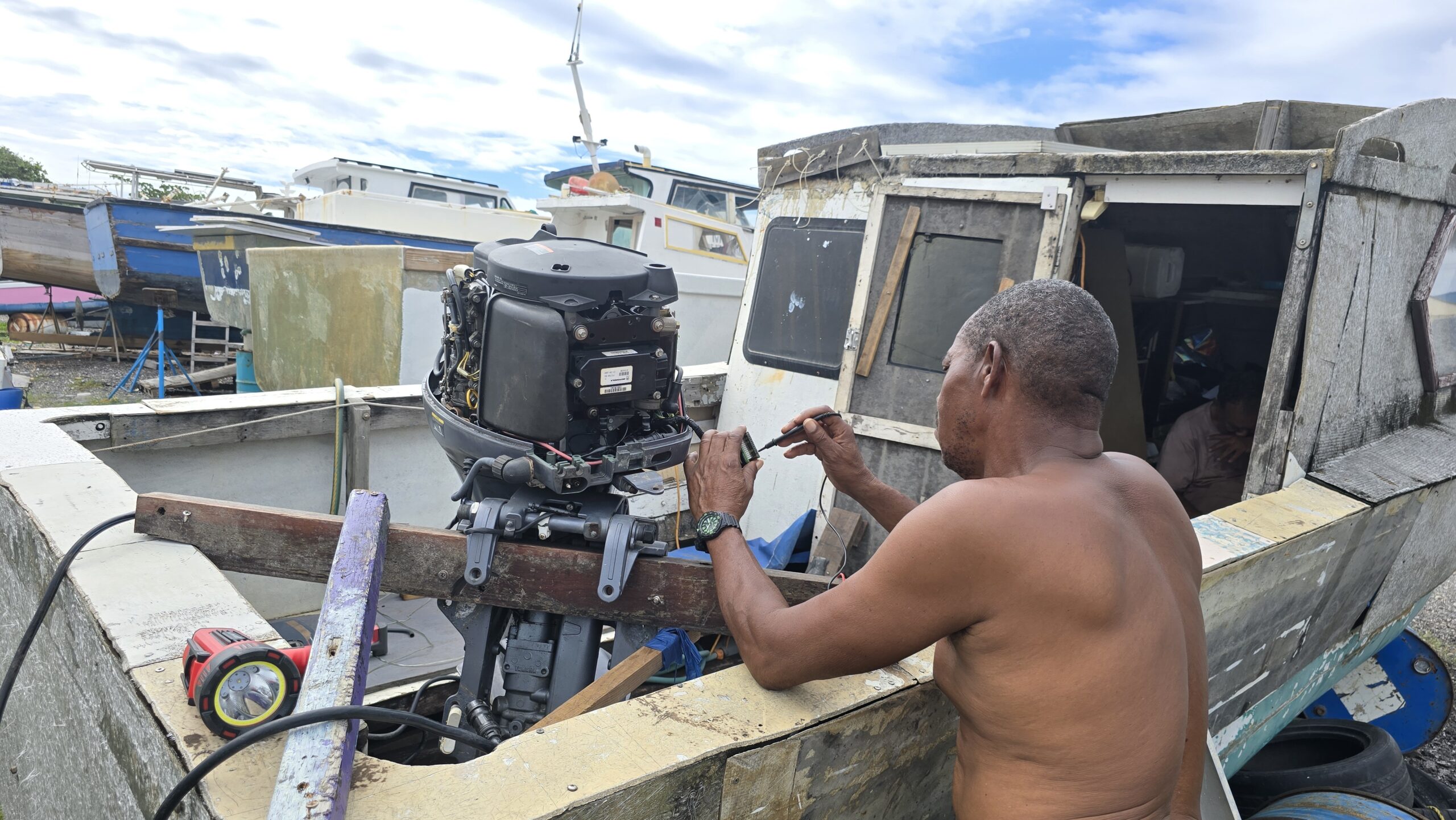
Six months following Hurricane Beryl’s devastating impact on Barbados, the island’s fishing community continues to face significant operational challenges despite government support and ongoing reconstruction efforts. Fisherfolk report persistent obstacles including inadequate boat repairs, critical shortages of ice and bait supplies, and slow restoration of key market infrastructure that collectively hinder a full return to normal operations.
Moonesh Dharampaul, leader of the newly formed Black Fin Fleet organization, acknowledged positive government engagement in addressing sector concerns. “We have maintained productive dialogue with ministry officials and received tangible support,” Dharampaul stated. “There’s a committed partnership developing as we progress into the new year.”
However, multiple systemic challenges persist beyond hurricane recovery. The fishing community contends with geopolitical tensions restricting access to traditional fishing grounds near Trinidad due to ongoing disputes involving the United States and Venezuela. “We’ve had to identify alternative fishing routes to maintain operations,” Dharampaul explained.
In response to safety concerns following an electrical fire at the fish market, authorities have committed to implementing enhanced safety protocols including fire extinguishers and first aid stations at docking facilities.
Technology adoption has emerged as a positive development, with fishermen increasingly utilizing WhatsApp for constant communication between vessels and shore. Plans are underway to install Starlink satellite systems on boats to maintain uninterrupted contact during fishing expeditions.
At the Harbour Road boat yard, one fisherman revealed the $12,000 government grant received for repairs proved insufficient, requiring an additional $15,000-$20,000 to complete restoration work—a process expected to take four more months. At Sand Pit, other fishermen reported having repaired vessels but facing severe ice and bait shortages that limit fishing frequency.
Fisherman Wayne Rose described the current situation: “Fishing remains slow with limited ice distribution—only about two boats daily receive adequate supplies. Catch volumes remain low while market prices have increased significantly.”
Environmental factors compound these challenges, as Hendy Davis noted changing sea temperatures and tides have altered fish migration patterns: “Historical fishing yields have diminished considerably. Species like flying fish have become scarce, forcing adaptation to different catch types.”
Despite these multifaceted obstacles, the formation of Black Fin Fleet has provided collective advocacy that fishermen acknowledge is gradually improving support systems and operational conditions within the industry.