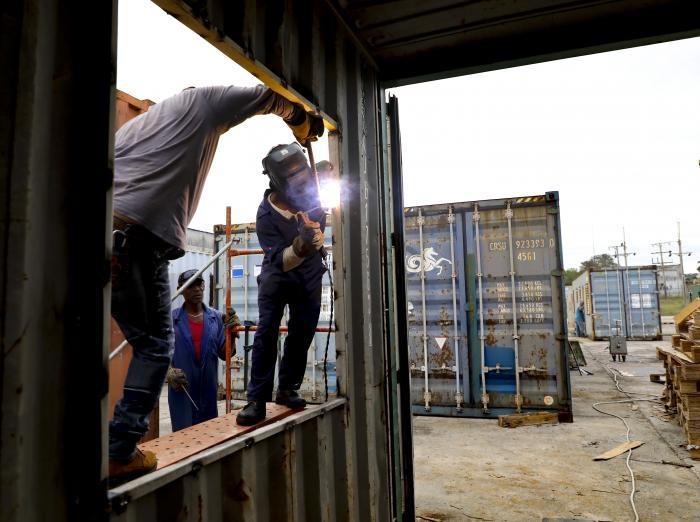
In an ambitious response to Cuba’s persistent housing challenges, a groundbreaking initiative is transforming decommissioned shipping containers into functional modular homes. At the Metal Productions Business Unit in Guanabacoa, workers labor intensively to convert 29-square-meter steel boxes into habitable spaces, complete with living areas, bedrooms, compact kitchen-dining spaces, and bathrooms.
The project utilizes approximately 3,500 used containers that originally arrived in Cuba carrying renewable energy equipment. Under the direction of Delilah Díaz Fernández, Housing Program director at the Ministry of Construction, these conversions represent a strategic approach to addressing the nation’s housing deficit, high construction costs, and material shortages.
Each container home features seven windows and two doors to ensure adequate ventilation, along with interior veneer structures to mitigate Cuba’s intense heat. The units are lined with plywood and include basic electrical systems, though final power connections must be completed on-site. Anti-corrosive painting is incorporated into the finishing process to enhance durability.
Financed through the State Budget, these homes are distinguished by their rapid construction timeline and relatively low cost compared to traditional building methods. The initiative specifically targets several beneficiary groups: workers from photovoltaic solar parks, victims of weather-related home collapses, and individuals in vulnerable socioeconomic circumstances awaiting housing solutions.
Prospective homeowners must pay a bank-determined amount that varies based on materials and finishes used in each unit. Subsequent maintenance responsibilities fall to the owners once properties are transferred.
The program faces operational challenges including intermittent power outages and fuel shortages that occasionally halt production. Despite these obstacles, the container conversion project continues advancing as part of Cuba’s broader strategy to develop sustainable urban housing models that effectively address shelter needs.