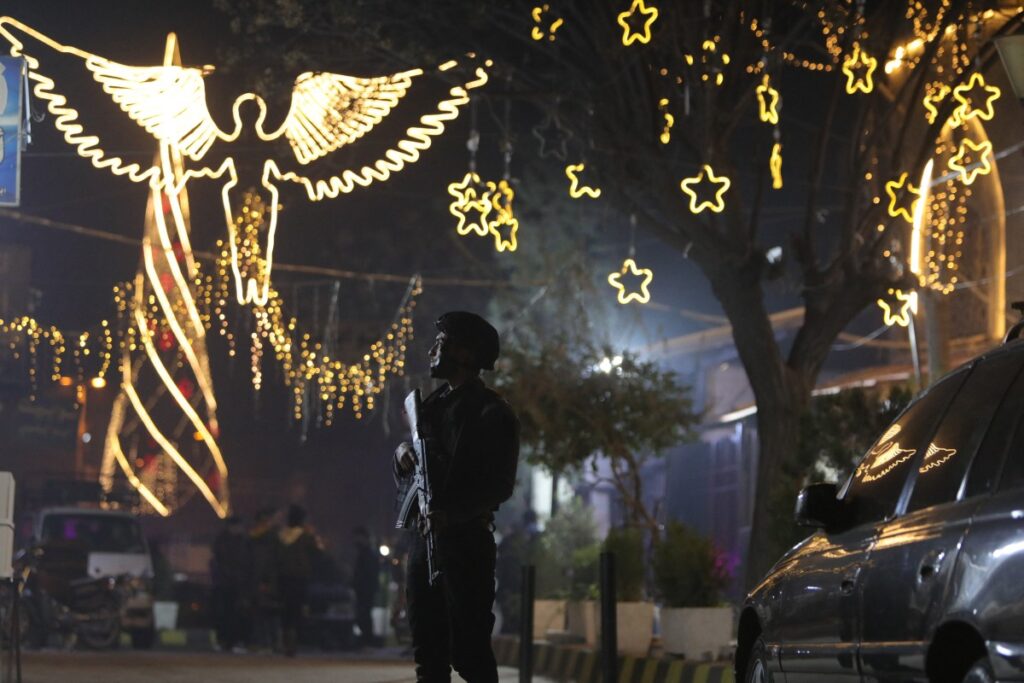
DAMASCUS, Syria — The historic lanes of Damascus’s Old City are adorned with festive Christmas illuminations, yet the seasonal cheer is markedly tempered by a heavy security presence. Government patrols move through the shadows, a stark reminder of the pervasive anxiety haunting Syria’s Christian minority as they attempt to observe their holidays.
The memory of a devastating June assault on the Saint Elias church, which resulted in 25 fatalities and numerous injuries following a shooting and suicide bombing, remains acutely fresh for the community. This incident has instilled a climate of caution, with residents opting for earlier curfews and subdued festivities.
Tala Shamoun, a 26-year-old university student, expressed the collective apprehension to AFP while visiting a Christmas market. She noted a rise in criminal activities like robberies and kidnappings in Damascus but identified the church attack as the most profound tragedy.
While Syrian authorities attributed the June violence to the Islamic State jihadist network, a lesser-known Sunni Muslim extremist faction also claimed responsibility. This occurs against a complex backdrop where Islamist factions that displaced ruler Bashar al-Assad have publicly recommitted to a doctrine of interfaith coexistence and inclusive governance. Nonetheless, the year has also witnessed severe sectarian violence, including massacres in the Alawite region and significant clashes in Druze-dominated southern areas.
In response, a multi-layered security strategy has been enacted. Interior Ministry forces are conducting stops and searches on pedestrians and motorcyclists throughout the Old City. An anonymous security officer, stationed at a key entrance with a communication device and deployment map, outlined the state’s protective mandate, emphasizing the duty to safeguard all citizens—Christian and Muslim alike—and to secure places of worship during celebrations.
The narrative of protection is central to Assad’s longstanding political posture, which has positioned him as a guardian for religious minorities who have frequently been targeted throughout the nation’s prolonged conflict. The demographic impact has been severe; Syria’s Christian population is estimated to have plummeted from approximately one million at the war’s onset in 2011 to roughly 300,000 today, due to widespread emigration.
Despite the underlying tensions, efforts to foster normalcy are visible. Shopfronts and trees in the Old City are decorated with red baubles and festive trimmings, and street vendors offer warm chestnuts. Complementing official security measures, unarmed civilian committees comprising local Christians, coordinated with state forces, have been mobilized to guard churches. Fuad Farhat, a 55-year-old coordinator from Bab Touma district, reported that these additional measures are helping to alleviate public fear, making residents feel secure enough to participate in the holiday atmosphere.
This glimmer of hope was echoed by Loris Aasaf, a 20-year-old student, who voiced a desire for joy and a renewed future for Syria, aspiring for a return to the era when all sects celebrated together, paving the way for national reconstruction.