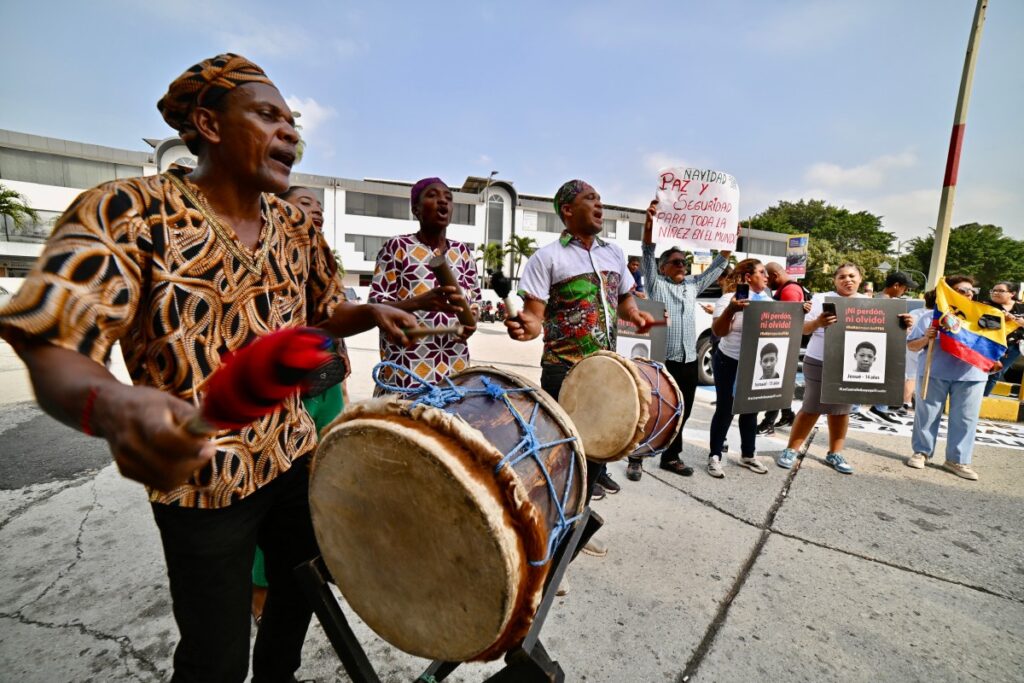
In a landmark ruling that has sent shockwaves through Ecuador, eleven military personnel have been convicted and sentenced to 34 years and eight months imprisonment for the forced disappearance and brutal killing of four children in Guayaquil. The sentencing, announced by Ecuador’s Attorney General’s Office on Monday, concludes a harrowing case that exposed severe human rights violations within the nation’s armed forces.
The victims, aged 11 to 15, had left their homes to play soccer in the port city of Guayaquil—a region plagued by escalating gang violence—when they were detained by members of the Ecuadoran Air Force. Their charred remains were discovered on Christmas Eve, bearing evidence of execution-style gunshot wounds to the head and signs of torture.
During the trial, video evidence presented in court depicted one soldier shooting a child at point-blank range and another assaulting a minor with a rifle. Five additional military personnel who cooperated with investigators received reduced sentences of 30 months.
Nataly Morillo, head of Ecuador’s Ministry of Government, declared the verdicts ‘a definitive step toward truth and justice,’ emphasizing that ‘nobody is above the law.’ The case has drawn intense scrutiny from international human rights organizations, with Amnesty International repeatedly urging the armed forces to acknowledge institutional responsibility.
The killings occurred against the backdrop of President Daniel Noboa’s aggressive anti-gang campaign, which has deployed military forces for urban policing duties in Guayaquil. Once considered one of Latin America’s safest nations, Ecuador has transformed into a major cocaine transit corridor, with Guayaquil recording 1,900 murders between January and September alone—the highest homicide rate in the country.
In January, Defense Minister Gian Carlo Loffredo issued a public apology for the incident, though the verdict has intensified debates about military accountability and the ethical boundaries of state-led security operations.