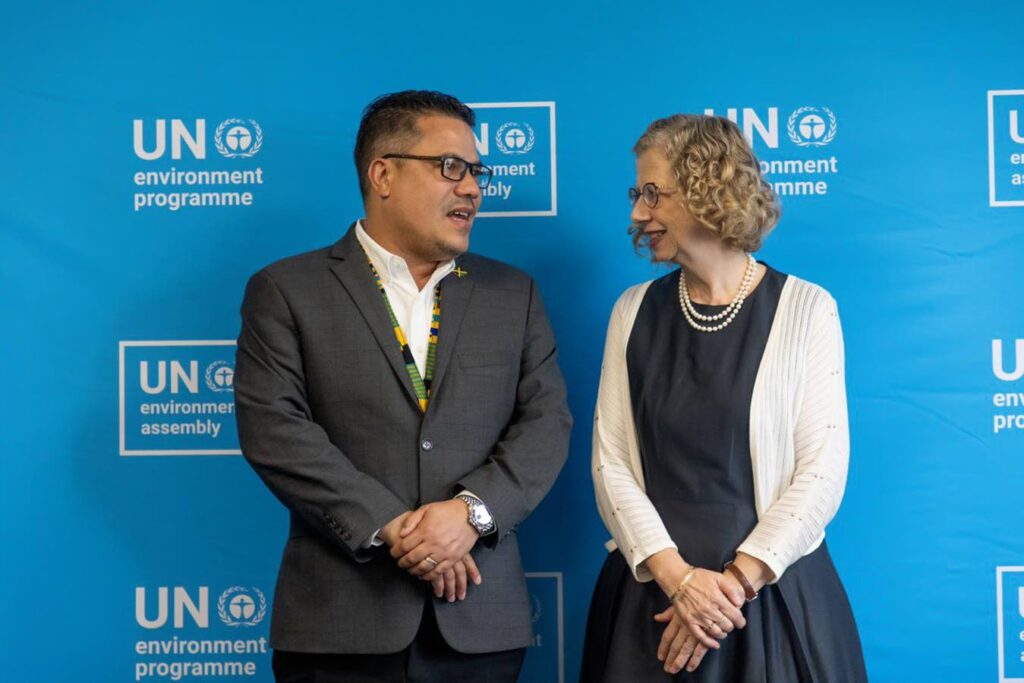
Jamaican Minister of Water, Environment, and Climate Change Matthew Samuda is positioned to assume the presidency of the United Nations Environment Assembly (UNEA), the premier global environmental decision-making body representing 170 nations. Currently leading Jamaica’s delegation at the UNEA-7 session in Nairobi, Kenya, Samuda would succeed Abdullah Bin Ali Al-Amri of Oman, whose term has concluded.
The Latin American and Caribbean Group (GRULAC) has formally endorsed Samuda as their candidate for the leadership position. Vincent Sweeney, head of the Caribbean Sub-Regional Office for the United Nations Environment Programme, confirmed that based on regional rotation protocols, Samuda represents the expected successor to the presidency.
The potential appointment comes during what environmental experts identify as a critical juncture for planetary health, with the triple environmental crises of climate change, biodiversity loss, and pollution pushing natural systems toward collapse. During his address to the assembly, Minister Samuda emphasized the urgent need for sustainable solutions, drawing from Jamaica’s recent experiences with catastrophic climate events.
Samuda detailed how Jamaica has endured multiple extreme weather events within four years, including two tropical storms and two major hurricanes—Category 4 Hurricane Beryl and Category 5 Hurricane Melissa. The latter caused approximately US$8.8 billion in damages, equivalent to 41% of Jamaica’s GDP, and severely damaged 51% of the nation’s primary forests. These events were compounded by record-breaking temperatures, unprecedented rainfall, and severe droughts, resulting in deteriorated soil quality, reduced pollination rates, and saltwater intrusion into freshwater sources.
The Minister advocated for the multi-dimensional vulnerability index, a UN-backed assessment tool that evaluates structural vulnerabilities beyond economic metrics, particularly crucial for small island developing states (SIDS) like Jamaica. Samuda reaffirmed Jamaica’s commitment to global environmental protection and climate resilience, supporting resolutions to strengthen UNEP’s role, address sargassum seaweed influxes, and accelerate coral reef conservation efforts.