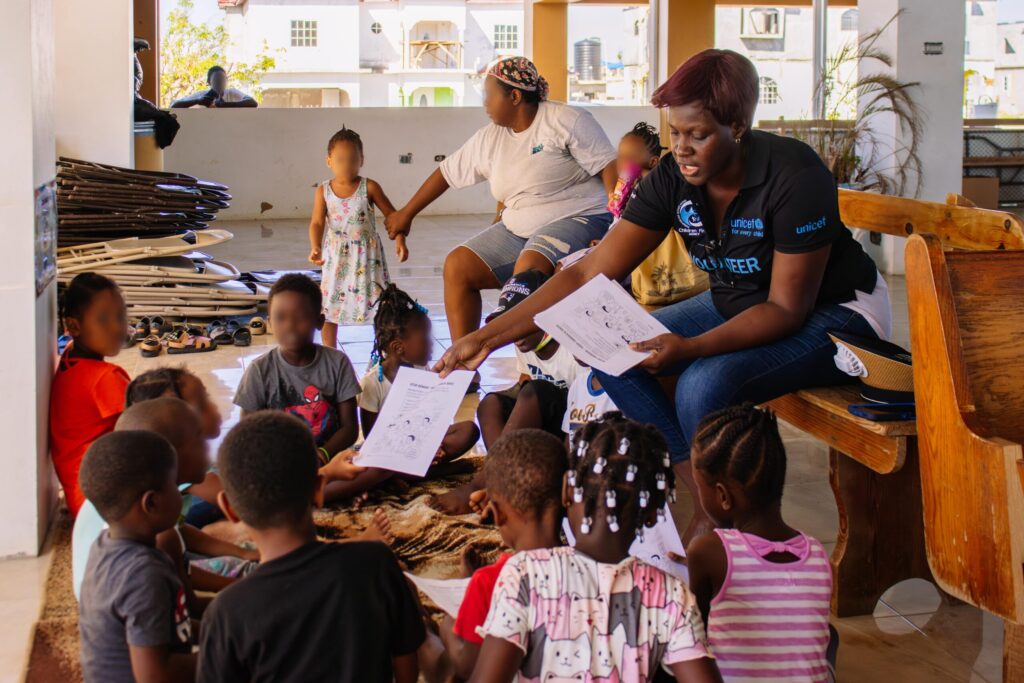
KINGSTON, Jamaica—In the wake of Hurricane Melissa’s devastating impact, UNICEF has intensified its multifaceted humanitarian response to address the educational and psychological needs of Jamaican children. The organization’s coordinated efforts with the Jamaican government and local partners focus on reestablishing educational continuity while prioritizing mental health support for storm-affected youth.
Current assessments reveal substantial disruption across Jamaica’s education sector, with more than 650 schools serving approximately 150,000 students experiencing significant operational challenges. UNICEF Education Specialist Rebecca Tortello emphasized the dual nature of the recovery mission: “Our objective extends beyond physical reconstruction to encompass the rebuilding of confidence and hope among Jamaica’s children.”
The organization’s strategic response includes both immediate and long-term interventions. Material support comprises the distribution of over 1,000 protective tarpaulins, 105 classroom tents, and hundreds of curriculum-aligned learning kits to create temporary learning environments. Additionally, infrastructure rehabilitation grants will benefit at least ten educational institutions, ultimately serving nearly 10,000 students alongside their educators and parents.
Recognizing the profound psychological impact of natural disasters, UNICEF has implemented a robust mental health support framework. This includes specialized training for 600 teachers in the Return to Happiness methodology, enabling them to provide enhanced psychosocial guidance to approximately 18,000 students. The Ministry of Labour and Social Security will train an additional 450 counselors and volunteers to deliver targeted support to the most severely affected 5,500 students and families.
Complementing these efforts, UNICEF has developed age-appropriate Psychosocial First Aid activity booklets for students across all educational levels, forming part of comprehensive mental health interventions projected to reach over 100,000 students and family members.
The response also addresses critical public health concerns through the restoration of water, sanitation, and hygiene facilities in educational institutions and emergency shelters. Collaborative initiatives with Water Mission International have already supplied more than 980,000 liters of treated water to affected communities and healthcare facilities in Westmoreland, serving approximately 50,000 residents.
UNICEF’s participation in high-level CARICOM education meetings has facilitated the exchange of best practices for emergency education management, ensuring Jamaica’s recovery efforts incorporate regional expertise and innovative approaches to crisis-responsive education.