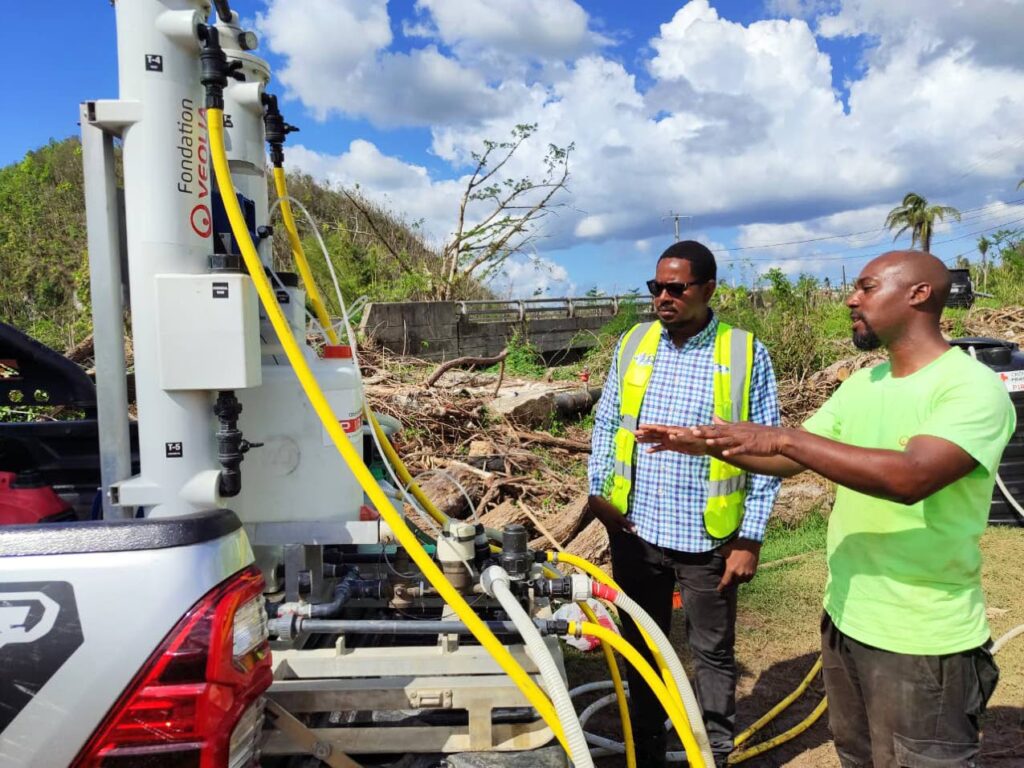
A collaborative humanitarian initiative has brought critical relief to the storm-battered community of Seven Rivers in St James, where residents had endured over a month without reliable access to clean water following Hurricane Melissa’s devastation.
The French Red Cross, in partnership with European water treatment conglomerate Veolia Group, has deployed a sophisticated mobile filtration unit that now provides potable water to thousands affected by the natural disaster. The compact system, mounted on a pickup truck and connected to a local river via specialized hoses, employs advanced membrane technology and granular-activated carbon filtration to transform contaminated water into safe drinking water.
Local farmer Carlos Cooke expressed the economic significance of this intervention: “Without this, we’d be spending enormous sums on water deliveries. Current rates reach $1,000 for small drums, creating financial strain when our livelihoods have already been destroyed by the hurricane.”
The system’s implementation has created a vital community resource, with residents from surrounding areas including Cambridge regularly visiting the site. Retiree Paul White highlighted both economic and health benefits: “This saves me approximately $10,000 in water costs while providing immediate drinking water without boiling requirements.”
Veolia engineer Daniel Rowe explained the technical process: “Our system utilizes hollow membrane fibers that physically block bacteria and debris while granular-activated carbons absorb dissolved solids. Minimal chlorine addition ensures safety without compromising taste.”
French Red Cross team lead Mark Pascal emphasized their rigorous quality assurance: “We conduct regular laboratory testing to maintain optimal chlorine levels and ensure consistent water safety standards.”
The site selection process was particularly challenging according to Pascal: “We identified Seven Rivers as among the most severely affected areas, though we acknowledge many communities remain in need.”
Local Councillor Javin Baker characterized the situation as “a level-10 crisis” noting that traditional water distribution methods had collapsed: “Damage to infrastructure and displacement of water truck operators left over 5,000 residents without alternatives. This international support arrived at our most critical moment.”