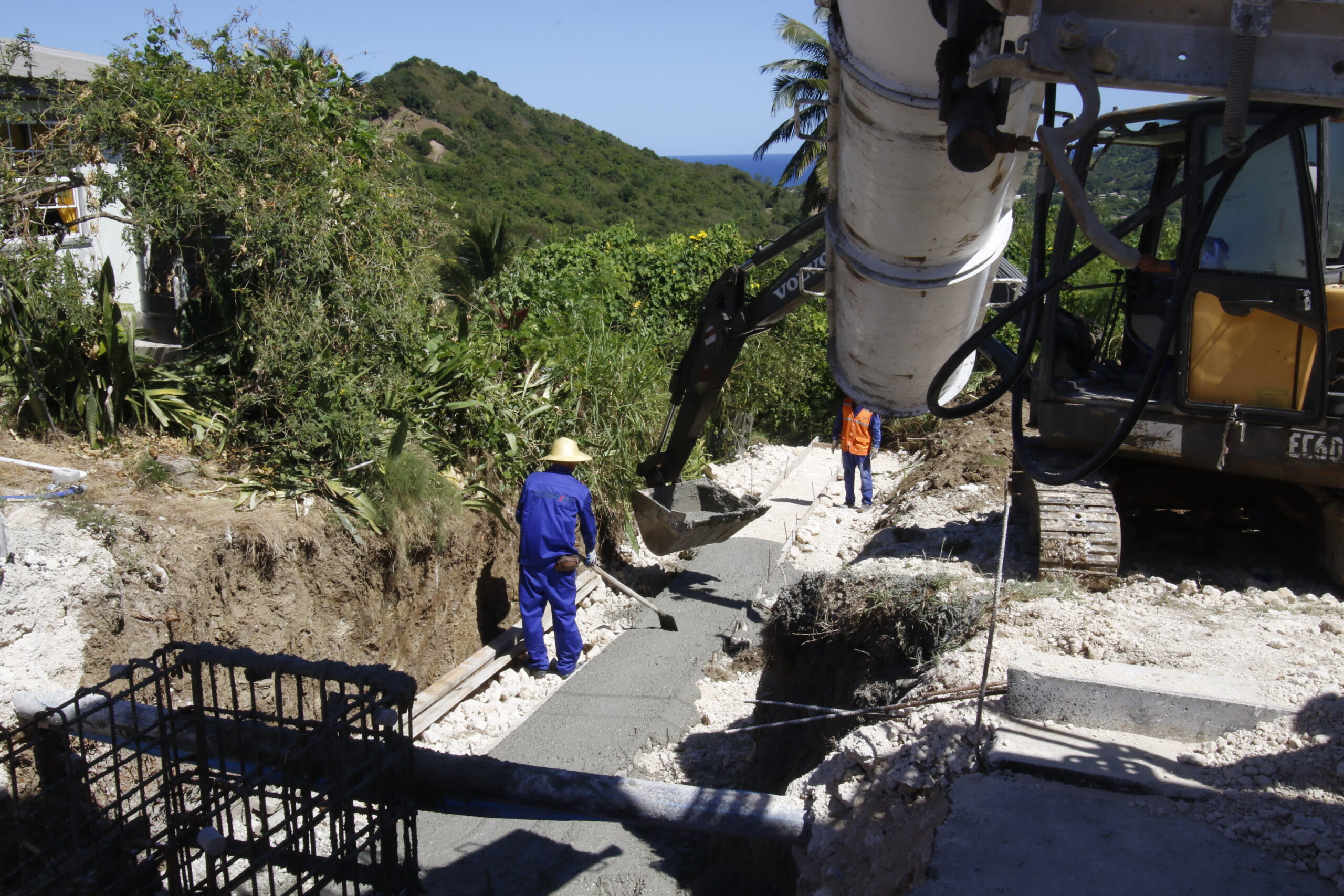
In the geologically volatile Scotland District of Barbados, two of the most technically complex routes in the national road rehabilitation program—Ermy Bourne Highway and Highway F (Phase 2)—are progressing toward their completion deadlines of July 2026 and August 2024 respectively. Chinese state contractor COMPLANT, leading the infrastructure initiative, confirmed the timeline despite confronting substantial environmental and technical obstacles.
Project Manager Wang Wei detailed the multifaceted challenges facing engineering teams, including unstable terrain patterns, seasonal rainfall disruptions, and the logistical complexities of utility relocations. The project, launched in 2020 and funded through a concessional loan from China’s Export-Import Bank, focuses on one of Barbados’ most fragile geological zones, spanning the erosion-prone region of St Andrew characterized by unstable clay, chalk soils, and high landslide susceptibility.
Additional high-priority sites accelerated by the Ministry of Transport & Works due to structural deterioration and public inconvenience include White Hill, Laynes Bridge, Airy Hill Bridge, and Melvins Hill Bridge. Wang emphasized that many bridges and culverts, such as Bruce Vale Bridge, required complete reconstruction after decades of service in corrosive conditions left them structurally compromised and unsuitable for modern transportation demands.
Road degradation has been largely attributed to aged asphalt surpassing its service life and inadequate drainage infrastructure, permitting water infiltration that damaged subgrades and triggered localized collapses—notably at Bloomsbury and Laynes Bridge gully.
To date, 11 roads including Jemmotts Road and Chance Hill Road have been fully paved, with active construction ongoing across 16 additional roads, bridges, and culverts. Eight bridges are scheduled for reconstruction, with Bruce Vale Bridge already completing pile foundation works and nearing abutment construction.
COMPLANT has implemented rigorous environmental and geotechnical safeguards, including Dynamic Cone Penetration testing and detailed subsurface investigations. Collaboration with government forester Nigel Jones ensured protection of rare species during excavation phases. Despite persistent challenges, Wang reaffirmed the team’s commitment to high construction standards and scientific management practices to ensure both quality and timeliness of the project.