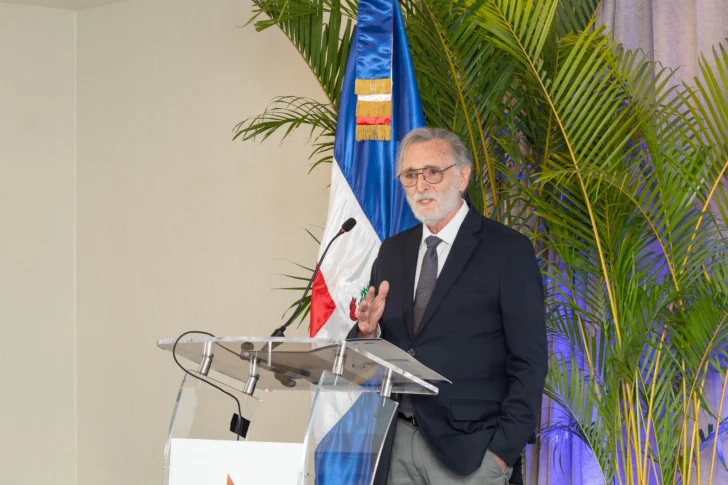
Santo Domingo – A recent conference organized by the National Institute of Migration (INM RD) shed light on the significant role of skilled migration in the global economy. Researcher Raúl Delgado Wise revealed a striking disparity: 56.5% of Dominicans residing in the United States possess postgraduate degrees, compared to a mere 2.6% in the Dominican Republic. His keynote address delved into the phenomenon of skilled migration within the framework of cognitive capitalism, emphasizing how knowledge, innovation, and highly trained human capital are pivotal to economic competitiveness.
The event brought together academics, specialists, and international organizations to explore the Dominican diaspora’s participation in global innovation networks. Delgado Wise highlighted the reliance of major technological ecosystems, such as Silicon Valley, on foreign talent. He noted that one-third of doctorates awarded in the U.S. go to migrants, underscoring the critical role of international expertise in driving technological advancements. However, he also cautioned that the privatization of knowledge exacerbates global inequalities and fosters technological dependence of the Global North on the Global South.
Elba Franco, director of the National School of Migration, celebrated the recent graduation of 25 professionals from the Master’s in Migration Policies and Development program. She emphasized the importance of scientific research in crafting effective public policies. INM RD director Wilfredo Lozano expressed gratitude to participants and advocated for an ‘insular perspective’ in migration governance. He also expressed interest in integrating Haitian students into future academic programs, highlighting the need for regional collaboration.
The conference underscored the dual nature of skilled migration for the Dominican Republic, presenting both opportunities and challenges. Key issues discussed included talent retention, innovation capacity, and the necessity of evidence-based policymaking to harness the potential of the diaspora effectively.