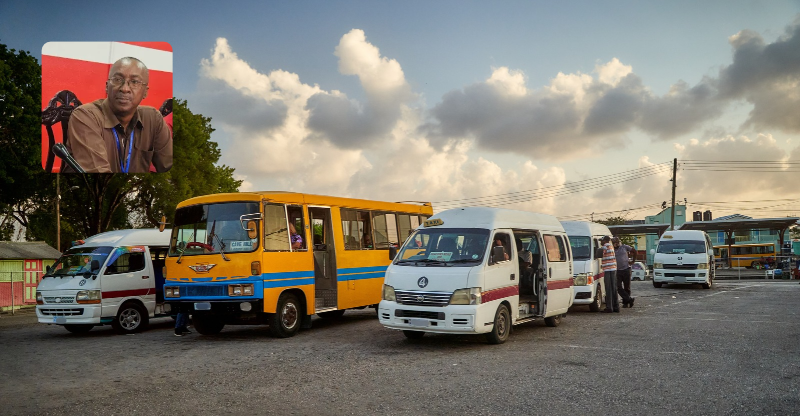
The leading representative of Barbados’ public service vehicle (PSV) operator coalition has laid out a sweeping set of urgent challenges facing the local transit ecosystem, including a critical shortfall of more than 200 active drivers that is pushing the industry to evaluate international recruitment as a stopgap solution. Roy Raphael, chairman of the Alliance Owners of Public Transport (AOPT), shared the series of cascading pressures during a recent public briefing, noting that only 600 licensed PSV drivers are currently operating across a fleet of 1,200 registered vehicles, with a large share of those units sidelined intermittently due to understaffing and other operational gaps.
Raphael emphasized that the staffing crisis has reached a breaking point, with even targeted local recruitment drives conducted as recently as this week yielding no qualified candidates. Unlike past decades, when a steady pool of part-time workers regularly took on weekend PSV shifts to supplement household income, local labor interest in the sector has plummeted, driven in large part by a growing social stigma attached to PSV work in recent years. Compounding that cultural barrier is a spate of recent violent incidents on the high-traffic 3Y route connecting Bridgetown to Jackson, which has driven a measurable drop in commuter patronage on that corridor, alongside widespread passenger complaints of unprofessional behavior including reckless driving and on-the-job alcohol consumption among some operators.
The AOPT chairman warned that understaffing is forcing remaining drivers to work well beyond safe, recommended limits of 8 to 12 hours per shift, creating a public safety risk while also taking a severe physical and mental toll on the workforce. Raphael noted that a growing number of older PSV operators have suffered serious illnesses or unexpected fatalities in recent months, a trend he links directly to unsustainable extended shifts. Many drivers also fail to make required national insurance contributions or attend routine health screenings, a gap the association is working to address by launching free, on-site health checks for all PSV staff at the central Bridgetown terminal in the near future.
To resolve the dual crises of falling ridership and labor shortages, the AOPT is rolling out a multi-pronged strategy: alongside evaluating overseas recruitment to fill at least 200 reserve driver positions immediately, the group has already opened formal talks with Barbados Community College to co-develop a certified training program for new drivers and legal conductors, to lower barriers to entry for local candidates. The alliance also plans to launch a large-scale public outreach campaign to dismantle the negative stigma around PSV work, highlighting underdiscussed benefits of the role including immediate, same-day pay for many operators. Raphael has also called on all current PSV staff to adhere to stricter professional conduct standards to rebuild commuter trust, and urged the national government to elevate public transport to the status of a core national priority to prevent further systemic collapse of the service.