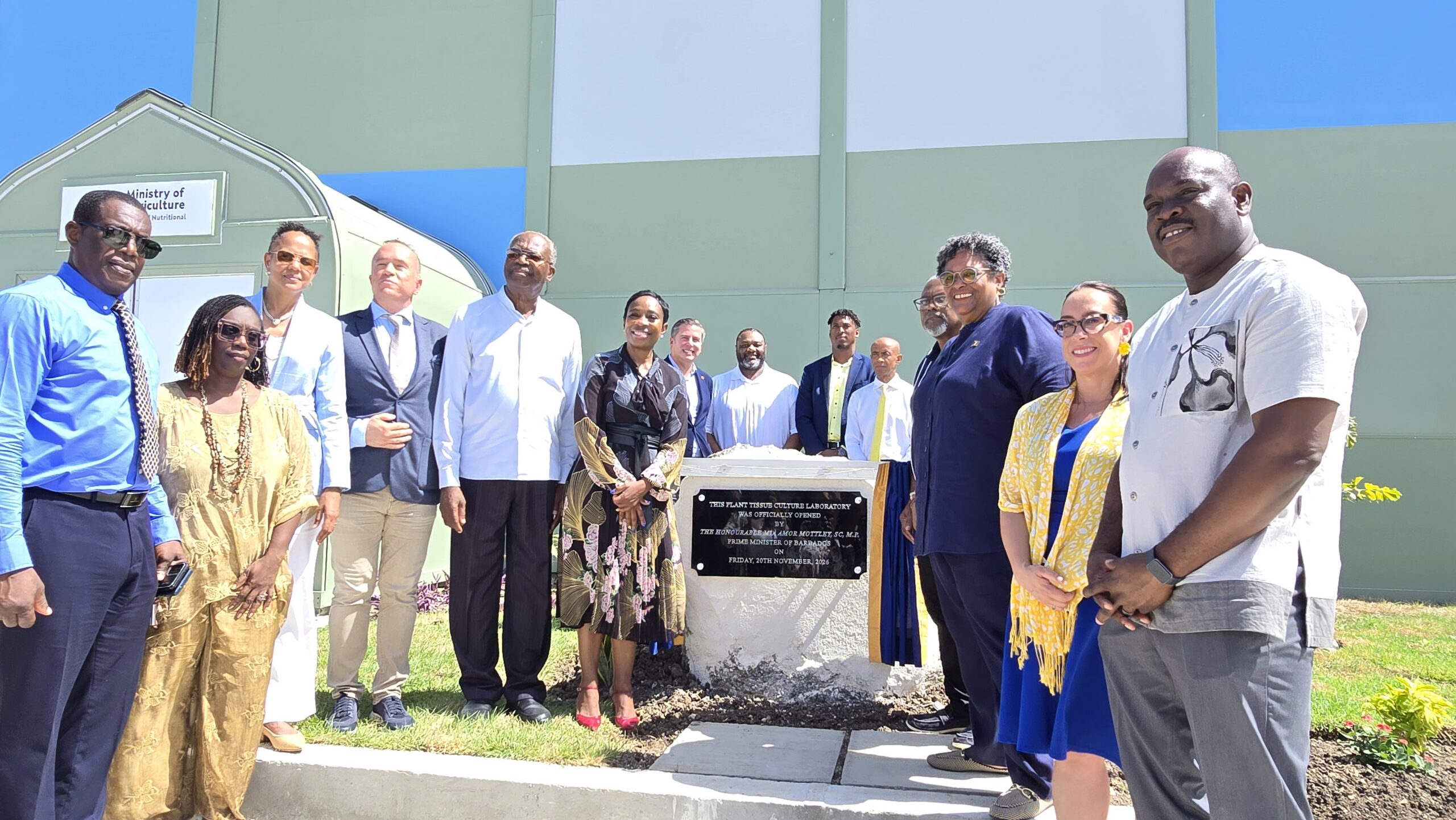
Delivering a stark yet proactive address during the official inauguration of the new Plant Tissue Culture Laboratory at the St Philip-based Home Agricultural Station last Friday, Barbados Prime Minister Mia Mottley issued a clear public warning that sustained disruptions to the island’s import supply chains could trigger imminent food shortages, while laying out a comprehensive, multi-stakeholder strategy to fortify domestic food self-sufficiency. Hosted by the Ministry of Agriculture, Food and Nutritional Security, the opening ceremony drew a diverse cohort of attendees including regional and international organizational representatives, alongside diplomatic and agricultural officials from Canada and Suriname. Mottley emphasized that Barbados’ fresh produce ecosystem currently operates on a razor-thin seven-day supply chain, with the vast majority of perishable foodstuffs shipped in from overseas ports such as Miami. A two to three week total halt to incoming vessel traffic, she noted, would rapidly empty supermarket shelves of critical fresh goods, a vulnerability the government can no longer afford to overlook. Drawing historical parallels to World War II-era policies that mandated large colonial plantations reserve a fixed share of their acreage for food crop cultivation to mitigate wartime scarcity, Mottley framed the new tissue culture lab and its attached regional germplasm repository as a foundational pillar of long-term agricultural resilience. The state-of-the-art facility will support targeted research to boost crop yields, distribute disease-free, high-performance planting materials to local smallholder and commercial farmers, and preserve genetically valuable native and regional crop varieties at risk of loss from extreme weather events. Mottley outlined that Barbados will leverage its 400-year legacy as a regional trade and logistical hub to aggregate cross-border demand for domestically grown produce, driving down per-unit production costs for local farmers and making homegrown food more affordable for all Barbadian households. To further reduce over-reliance on a small handful of import partners, the government has recently forged new food supply and agricultural cooperation pacts with Guyana, Suriname, and Venezuela, diversifying the island’s global sourcing network. The prime minister also highlighted compounding risks that threaten both imported and domestic food supplies: annual hurricane seasons can simultaneously disrupt shipping routes and destroy standing local crops, creating cascading food access crises that can take months to fully resolve. She noted that with the country operating under an International Monetary Fund structural adjustment programme, fiscal headroom for emergency food import subsidies is extremely limited, making proactive investment in local agricultural capacity a far more cost-effective long-term solution than reactive crisis response. Mottley further tied food security directly to Barbados’ ongoing public health priorities, pointing out that widespread access to affordable, nutrient-dense local root crops and fresh vegetables will reduce the population’s reliance on expensive, processed imported foods that are a leading driver of the country’s high rates of diabetes and other chronic non-communicable diseases. The soaring public healthcare costs of treating conditions such as kidney failure requiring dialysis, she stressed, make agricultural investment a critical public health intervention as much as an economic or national security priority. Finally, Mottley confirmed that the new research facilities will also support the long-term revitalization of Barbados’ iconic but struggling sugar industry, rejecting calls to abandon the sector entirely and noting that targeted scientific research will underpin the fundamental restructuring needed to improve yields, reduce operational costs, and secure a viable, sustainable future for the historic agricultural sector.