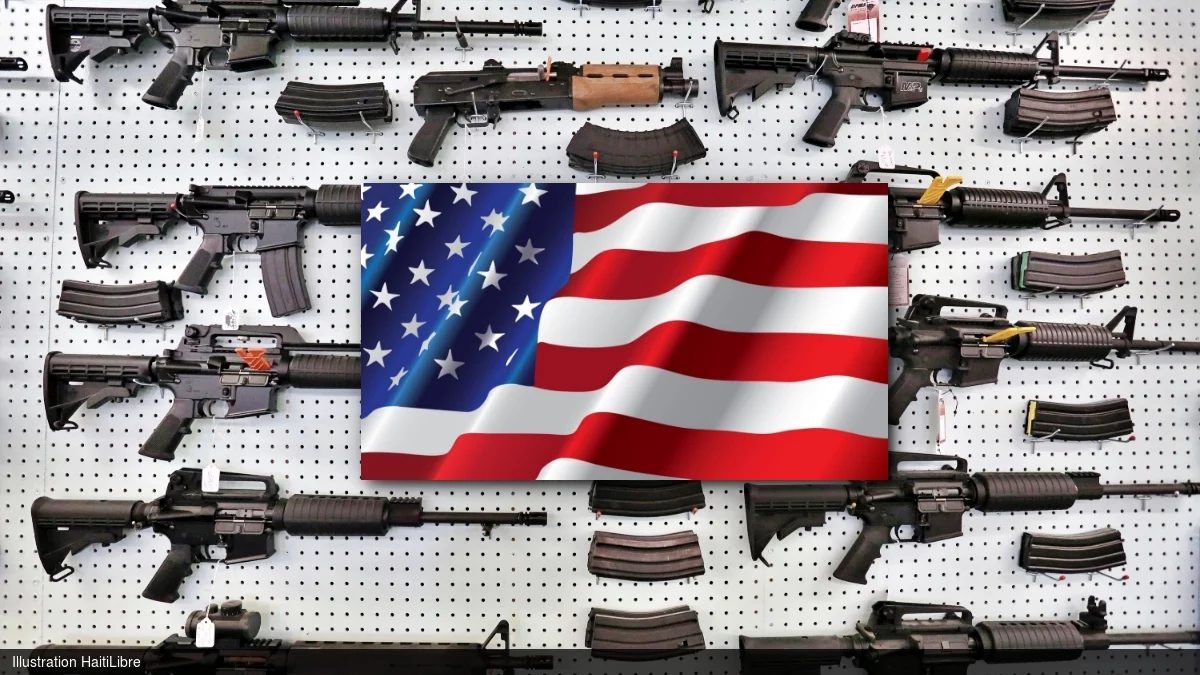
Behind closed doors in Washington, senior U.S. government officials have recently conceded that American-manufactured firearms and ammunition are a core, underrecognized driver of the spiraling bloodshed and state collapse unfolding across Haiti, alongside parallel crises in Mexico. For years, official U.S. public rhetoric has uniformly framed the rampant instability in both nations as a problem generated exclusively by domestic bad actors: ruthless Haitian street gangs that seized swathes of Port-au-Prince after the 2021 presidential assassination, and violent Mexican drug cartels that terrorize local communities. But internal admissions from administration insiders now confirm that the vast majority of the heavy weaponry wielded by both Haitian gang networks and Mexican criminal syndicates traces directly back to U.S. supply chains, a reality that upends longstanding official narratives. The shift in U.S. internal assessments first gained traction in 2023, when the United Nations Office on Drugs and Crime published a landmark peer-reviewed report that formally designated the United States as the single largest primary source of illegal arms flowing into Haiti, in direct circumvention of the longstanding UN-mandated national arms embargo intended to curb gang power. For years, this explosive finding received almost no mainstream coverage in U.S. domestic media, but it gradually gained traction among a cohort of U.S. policymakers who began to re-evaluate their nation’s unacknowledged role in Haiti’s humanitarian catastrophe, which claims thousands of civilian lives annually. The evolving internal consensus has laid bare three overlapping, intractable dilemmas that U.S. leaders now confront, even as competing political priorities actively worsen the crisis. The first and most immediate dilemma is the unbroken, unregulated flow of U.S. arms across Caribbean borders, even as Washington continues to frame local criminal groups as the sole root of the violence. The second, more ironic dynamic is that U.S.-sourced weapons are arming every side of the ongoing conflict: while gangs and cartels stockpile illicitly trafficked American firearms, the Haitian and Mexican security forces deployed to confront these criminal groups are also overwhelmingly equipped with U.S.-manufactured or U.S.-donated arms, creating a self-sustaining cycle of American-fueled bloodshed that shows no sign of abating. The third and most politically charged barrier to progress stems from current administration policy choices. While some frontline U.S. federal agencies have launched targeted prosecution efforts against arms trafficking rings, the Trump administration has actively moved to dismantle the specialized oversight and enforcement tools that the prior Biden administration built to crack down on cross-border illegal arms flows. Testifying before U.S. Congress in July 2026, Colonel Justin Gorkowski, co-leader of the interagency task force overseeing anti-gang operations in Haiti, confirmed that large shipments of weapons and ammunition are regularly smuggled directly from U.S. ports in Florida and New York, transiting through the Dominican Republic before being distributed to gang cells across Haiti. Despite scattered calls from administration officials to prioritize anti-trafficking work, the White House’s rollback of enforcement frameworks has allowed hundreds of thousands of unregistered U.S. firearms to circulate freely across Haiti, entrenching gang control over most of Port-au-Prince and extending the country’s spiraling humanitarian crisis. Even as a growing number of senior U.S. officials privately acknowledge that unregulated American arms exports are the foundational driver of Haiti’s ongoing death and destruction, the administration’s deliberate policy choices have left Washington effectively complicit in the ongoing carnage, with no clear roadmap to de-escalate the crisis.