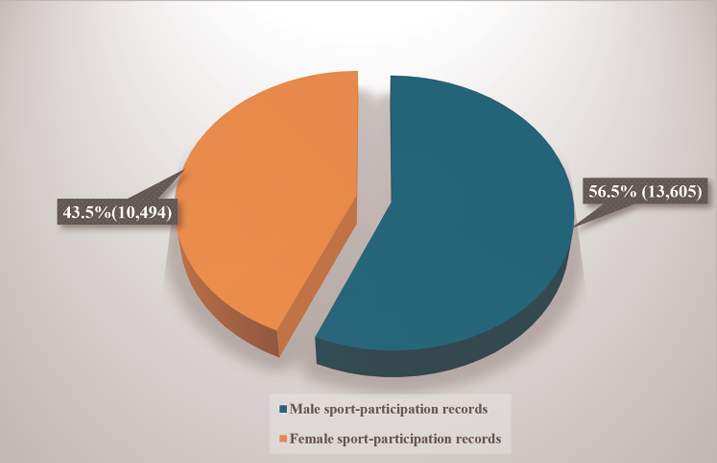
A newly released comprehensive Youth Sports Survey from Barbados’ Ministry of Sports and Community Empowerment, fielded across the 2024/2025 academic year from January 2025 onwards, has laid bare stark gaps in equitable access to organised sport for the island’s student population, despite robust engagement in a small handful of high-profile disciplines. The research canvassed 35,502 students across 79 primary and 23 secondary educational institutions, tracking participation across 25 distinct sporting categories and logging a total of 24,099 recorded participation instances. Data analysis shows that nearly 75% of all recorded participation is concentrated in just five sports, with dramatic gender imbalances skewing engagement across most categories. Track and field topped the popularity rankings, drawing 26% of all participants, followed by football at 16%, cricket at 14%, netball at 11%, and volleyball at 8%. Barbados’ unique indigenous sport, road tennis, claimed the sixth spot in the participation rankings, drawing more than 1,100 total registrants. Gender breakdowns reveal boys make up 56.5% of all recorded participants, with the widest disparities appearing in traditionally male-coded sports: in football, boys outnumber girls by a ratio of nearly four to one, with fewer than 800 female participants out of a total 3,700 total players, while cricket sees an even more lopsided majority of male registrants. Netball, by contrast, remains overwhelmingly female-centric, with girls accounting for roughly 95% of all participants. Only a small subset of disciplines, including track and field and swimming, boast near-equal gender representation. Niche activities ranging from chess, dominoes, and cycling to wrestling, archery, taekwondo and karate also drew smaller pools of participants, with chess leading this sub-group and dominoes seeing far higher engagement among secondary school students. Overall, primary school participation numbers marginally outpace those at the secondary level, a trend the ministry notes must be contextualised against the differing total number of participating institutions across the two educational tiers. Addressing the survey’s findings, Minister of Sports and Community Empowerment Charles Griffith emphasised that the long-term societal benefits of youth sport extend far beyond physical fitness, fostering critical life skills including discipline, collaborative teamwork, leadership, emotional resilience to navigate setbacks, goal-setting capabilities and mutual respect that serve young Barbadians across all areas of adult life. Griffith issued a public call for parents and guardians to take a more proactive role in introducing children to a diverse range of sporting activities, rather than waiting for a child to express interest in elite professional athletic pathways, to help them discover hidden talents and new passions. The full survey dataset is set to act as a foundational roadmap for the ministry’s upcoming policy and programming work, including targeted expansions of under-served sporting disciplines, targeted interventions to close persistent gender participation gaps, dedicated investment to preserve and grow the indigenous road tennis sport, upgrades to coaching training and community sporting infrastructure, and strengthened formal partnerships between schools, national sporting federations and local community organisations. “Our goal is not just to nurture elite athletes, but to cultivate well-rounded, capable young people who can make meaningful, positive contributions to Barbadian society,” Griffith stated.