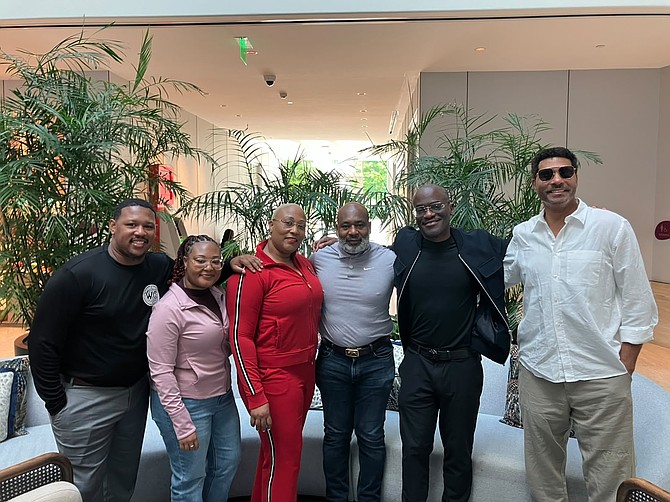
Hosted by wellness enterprise Anachronist Wellness and sports mentorship collective The Winner’s Circle, a two-day high-level sports performance summit wrapped up last weekend at Baha Mar in The Bahamas, drawing roughly 60 attendees per day ranging from youth competitors to seasoned professional athletes.
The event’s headline speaker, Edwardo Thompson, a leading orthopaedic sports and neuromuscular therapist, delivered a stark, urgent message to all participants: athletes who fail to claim full ownership of their physical health, inherent talent, and professional market value will inevitably become puppets controlled by external parties, ranging from team management to exploitative third-party representatives. Thompson emphasized that far too many elite athletes face premature career endings due to preventable overuse injuries, unmanaged competitive pressure, and a lack of agency over their own career trajectories, erasing their long-term earning potential in the process. “Your athletic gift is a unique, God-given asset. If you do not steward it intentionally, someone else will seize control of it, and you will never reap the full rewards of your hard work,” he told attendees.
Thompson later elaborated to The Tribune at Goldwynn Resort that the seminar’s core mission is to overhaul global standard practices for athletic rehabilitation, performance optimization, and recovery, centering a three-pronged framework that integrates mind, body, and spiritual wellness rather than focusing solely on physical training. Drawing on public data for major North American professional leagues, he noted that the average NFL career spans just 2.5 years, while NBA athletes typically compete for 5 to 8 years, with the vast majority forced into early retirement by untreated chronic injuries, cumulative physical wear, and unaddressed mental strain from high-stakes competitive environments. Framing athletic career management as running a small business, Thompson stressed that every athlete should see themselves as the chief executive officer of their own body, with full authority to make decisions that protect their long-term viability. The programme is designed to be inclusive, he added, extending access not just to collegiate and professional athletes but to competitors of all age groups, to help them maintain active lifestyles and financial stability long after their competitive playing days end.
A key innovative component unveiled at the summit is a proprietary whole-body scanning system that claims to assess physical condition down to the cellular level, covering every part of the body from the scalp to the toenails, before delivering targeted signals to stimulate natural bodily recharge and regeneration of damaged tissue. Thompson framed the technology as the future of medical care, though it is important to note that such bioresonance-style scanning and healing claims fall outside the bounds of widely accepted mainstream medical practice. Global regulators have repeatedly challenged similar devices marketed overseas, with the UK’s Advertising Standards Authority confirming there is no credible peer-reviewed evidence to support claims that these systems can accurately diagnose medical conditions or deliver therapeutic treatment.
Co-organizer Lakera Thompson, who specializes in athlete-focused skincare, explained that the same cellular scanning technology is integrated into her wellness offerings, as prolonged sun exposure during outdoor training often leaves competitive athletes with permanent hyperpigmentation and long-term skin damage. Her combined approach pairs personalized facial treatments with internal wellness protocols, using cellular testing to identify hidden inflammation and toxic buildup before administering targeted detoxification regimens.
The event also outlined far-reaching community-focused initiatives, spearheaded by Alan J West, an entrepreneur and partner with the humanitarian group Global Estates Society. West, who spent 13 months in the U.S. foster care system after being born at Harlem Hospital, shared that the programme will prioritize supporting talented young athletes in foster care, who often lack access to mentorship, financial guidance, and specialized performance resources. The partnership plans to bring these underserved youth athletes to The Bahamas for regenerative longevity therapy, with formal collaborations in place with renowned actor Blair Underwood and multiple U.S. media outlets. Organizers will begin producing local content in partnership with Anachronist Wellness, host a dedicated networking dinner on December 5, and eventually expand all programming to the Bahamian Family Islands.
Rakeem Vick, the organisation’s chief operating officer, shared that his recent visit to Baha Mar’s youth golf programme, which offers training for children as young as 12 months old and featured a 13 or 14-year-old girl leading coaching sessions for younger participants, deeply moved him as a father of three daughters. He advised all young athletes to prioritize early goal-setting and pay as much attention to their off-field routines and long-term career planning as they do to in-competition performance. Local Bahamian entrepreneur and competitive athlete Aaliyah Thompson added that the seminar filled critical knowledge gaps for attendees, covering everything from evidence-based nutrition and training regimens to physical therapy protocols and the often-overlooked mental health components of post-competition recovery. She emphasized that athletic success cannot be measured by wins and losses alone, noting that family-wide shared training and healthy eating habits create a supportive environment that helps young athletes thrive, and that emerging wellness technologies can help injured competitors recover far faster than traditional medical approaches previously allowed.
Looking ahead, the organizing team confirmed they are in early talks with major sports and entertainment platforms including Netflix and ESPN to produce a documentary highlighting underrepresented Caribbean athletic talent, with the goal of raising global awareness and directing more funding and developmental resources to local rising stars across the region.
Athletes urged to take ownership of their careers