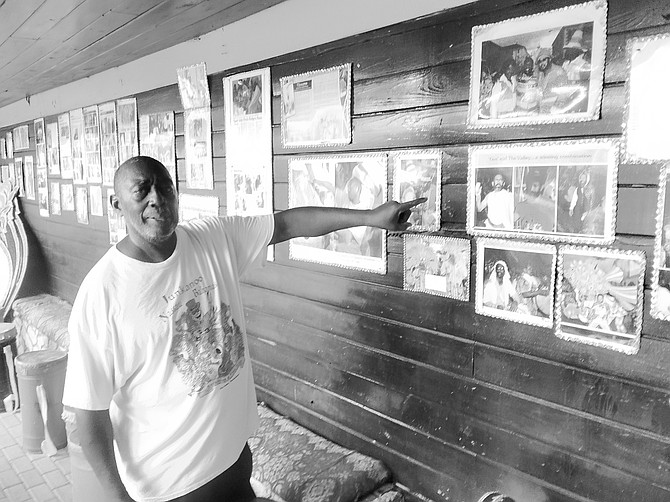
Quinton “Barabbas” Woodside, a 65-year-old lifelong Junkanoo practitioner and steward of Bahamian cultural heritage, has spent decades nurturing what is now the Junkanoo World Museum & Arts Centre in Nassau, growing the space from a 50-year-old informal Junkanoo shack to a beloved community hub that offers free hands-on training in traditional crafts to local children. For 30 years, the facility has served as a safe, intergenerational gathering spot where young people learn costume pasting, goatskin drum making, cowbell crafting, alongside life skills such as discipline, academic support, and personal accountability. Its inclusive programming has welcomed autistic, Deaf, and disabled youth, many of whom have joined public Junkanoo rush-out parades, while generations of attendees have gone on to build careers as teachers, welders, preachers, and public officials.
Despite Nassau’s record-breaking cruise tourism boom, the museum remains largely overlooked by mainstream tour operators, leaving Woodside and his extended family to shoulder nearly all of its operating costs. The only consistent existing partnerships are limited to a single weekly visit from Majestic Tours and small groups booked through local jeep excursion operators, traffic far too low to sustain planned expansion. A recent series of Friday night cultural performances, launched to draw larger paying audiences, failed to gain traction after a well-attended free opening event. Woodside supplements the museum’s minimal revenue with proceeds from an on-site upstairs shop that sells Junkanoo costume supplies, and he often directs limited funds to supporting struggling neighboring families, covering grocery costs, medication co-pays, and other essential needs for households whose children participate in the centre’s programmes. Many of his family members and local volunteers work unpaid, as he cannot afford to pay them the full wages they deserve.
Woodside estimates that with targeted, coordinated support from the Bahamian government, tourism boards, tour operators, and local transportation stakeholders such as taxi fleet owners, the museum could scale its operations to create 40 to 50 full-time local jobs, including roles for chefs, food service staff, bus drivers, and programming assistants, while expanding its free youth cultural education offerings. He notes that the facility is already a high-impact economic and cultural asset that draws international cultural tourism revenue to local communities, rather than siphoning profits to large offshore cruise corporations.
He has already raised his concerns directly with Leslia Miller-Brice, Minister of Culture, Arts and Heritage, whom he praises for proactively convening listening sessions with independent cultural practitioners, but notes that bureaucratic resistance across other government offices often delays or blocks small grants and targeted support for community-led cultural institutions. He emphasizes that investing in independent, grassroots cultural stewards does not represent a public expense, but a high-return investment that preserves at-risk intangible cultural heritage, creates local employment, and keeps young people engaged in positive, skill-building activities. The museum’s core mission is also dedicated to preserving the legacy of pioneering Junkanoo leaders including Gus Cooper, Paul Knowles, and Sammy Thompson, all of whom have passed away, leaving Woodside as one of the few remaining custodians of their specialized traditional knowledge. Despite decades of unrelenting financial pressure, Woodside remains resolute that he will never close the centre, and will continue advocating until his request for collaborative public and private sector support reaches the decision-makers who can help the museum reach its full untapped potential.