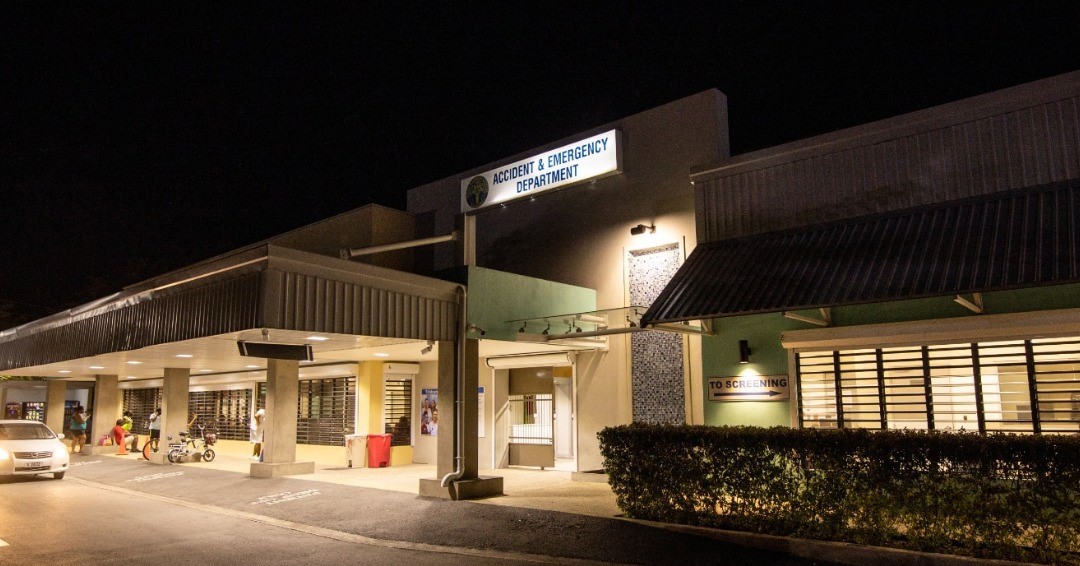
Barbados’ flagship Queen Elizabeth Hospital (QEH) has rolled out enhanced ward surveillance and tightened on-site security protocols in the wake of a violent assault on a frontline nurse in its Accident and Emergency Department on a recent Wednesday evening, reigniting long-running advocacy for harsher legal consequences for acts of aggression targeting medical staff. The Barbados Nurses Association (BNA) has highlighted that the fresh incident has thrust back into public focus a formal set of legal protection proposals the organization submitted to the national Ministry of Health nearly 12 months prior, which to date has not received any formal official feedback. Hospital leadership confirmed that the unprovoked assault unfolded at approximately 8 p.m., when a male nurse was physically attacked while delivering routine care to a patient; the perpetrator was identified as a separate admitted patient living with Alzheimer’s disease. In remarks to local outlet Barbados TODAY, QEH administrative representatives outlined that the upgraded security framework includes expanded real-time monitoring coverage across all inpatient and emergency wards, as well as more structured, frequent coordination between on-site security teams and clinical ward staff to identify and de-escalate potential high-risk situations earlier. Hospital management emphasized that it is prioritizing all necessary operational adjustments to cultivate a safe, secure working environment for its entire staff cohort and all patients accessing care. In an official public statement released the day after the assault, the QEH noted that it had activated immediate remedial security steps within hours of the incident, and had convened in-person meetings with all nursing staff reporting for their Thursday shifts to directly hear their concerns, address anxieties, and outline the new safety measures being implemented. QEH Chief Executive Officer Neil Clark reiterated the institution’s longstanding zero-tolerance stance toward any form of violence directed at healthcare personnel, and committed to providing full, ongoing support to the male nurse who was harmed in the incident. Parallel to the hospital’s actions, BNA president Dr. Fay Parris noted that the latest assault has once again amplified widespread anxieties across the nursing profession regarding inadequate legal and on-the-job protections for frontline care teams. Speaking remotely from a regional nursing conference she was attending in St. Kitts, Parris confirmed that the formal policy brief outlining the association’s requests for stronger legal safeguards for healthcare workers was delivered to the Ministry of Health previously, and the BNA is still awaiting a formal written response to the submission. “We want to state unequivocally that the Barbados Nurses Association completely and unreservedly opposes any individual using physical force against our nursing members while they carry out their life-saving duties,” Parris emphasized. The BNA has assigned its first vice-president, who also leads the association’s industrial relations portfolio, to conduct a full, independent review of the Wednesday assault before the organization releases a detailed formal public statement on its findings. This latest incident is not the first high-profile attack on a Barbadian nurse that has sparked advocacy for legal reform: back in September 2025, 22-year-old Josiah Lovell assaulted 64-year-old senior nurse Sister Hyacinth Green while she was on duty at the Randall Phillips Polyclinic in Oistins. Lovell later pled guilty to the charge of assault occasioning actual bodily harm, and was sentenced to a $1000 fine, 240 hours of mandatory community service, and a $400 compensation payment to Green. At the time of that ruling, Parris publicly criticized the penalty as far too lenient given the gravity of targeting a healthcare worker who was fulfilling her professional responsibilities. It was in the aftermath of that 2025 incident that the BNA drafted and submitted its formal policy brief to the health ministry, requesting formal consultation to develop stiffer, more deterrent penalties for individuals who assault medical staff. “Healthcare workers devote years of rigorous training, and routinely go far beyond the minimum requirements of our roles to support the public, so we have a reasonable expectation that our work will be respected, and our physical safety will be protected,” Parris stated. The QEH’s management also acknowledged that patients living with certain cognitive or complex medical conditions can at times exhibit unanticipated, unpredictable behavioral patterns that present unique safety challenges for care teams, but stressed that the well-being of its staff remains the organization’s non-negotiable top priority. Hospital leadership added that it will continue conducting ongoing reviews of its security protocols and clinical operational workflows, to ensure that safety upgrades do not compromise the quality of compassionate, appropriate care that is delivered to patients with complex medical and cognitive needs. Hospital officials also confirmed that no industrial action or work stoppages have occurred in the wake of the Wednesday assault, and full joint investigations between the hospital, relevant regulatory bodies, and law enforcement are still ongoing.