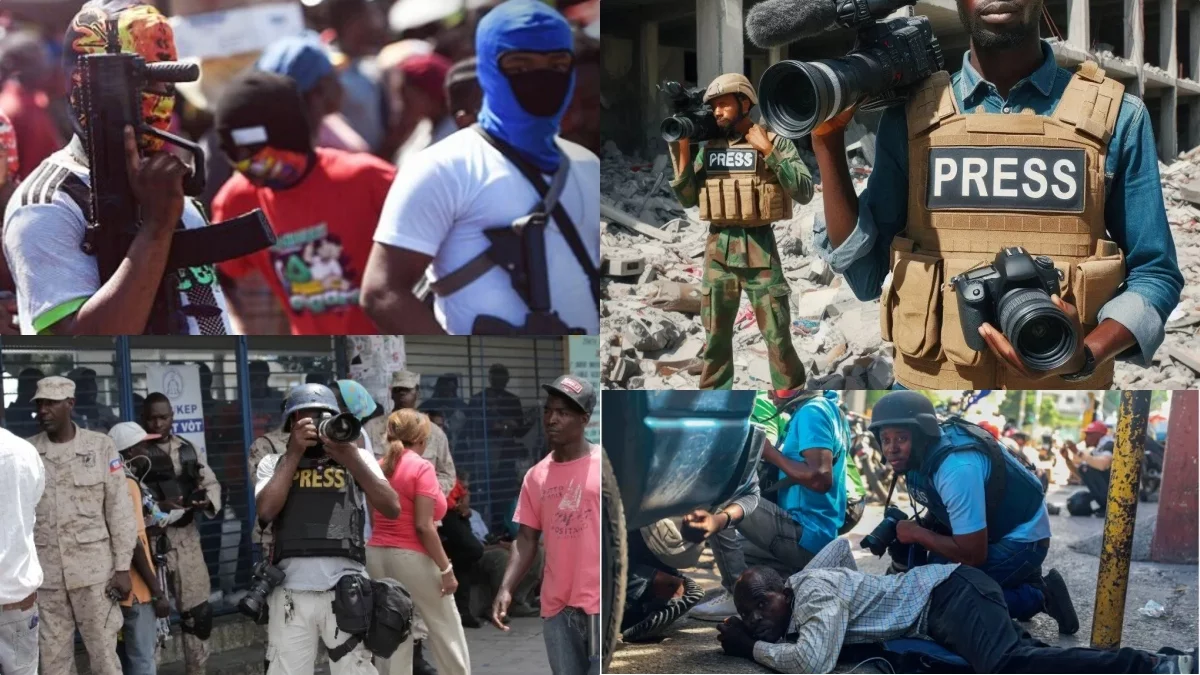
At the close of its 82nd General Assembly held in Bogotá, Colombia on October 25, 2026, the Inter-American Press Association (IAPA) issued a damning assessment of press freedom conditions in Haiti, framing the current state as fully critical amid the unrelenting spread of armed gang control and rapidly worsening security risks for media workers and independent news outlets across the Caribbean nation. In its formal country-specific report on Haiti, the regional press advocacy body emphasized that practicing journalism in the territory has evolved into an extraordinarily high-stakes occupation, with reporters facing a constant barrage of targeted threats, abductions, physical assaults, and premeditated killings, alongside sweeping limitations on their ability to travel across conflict zones and access on-the-record sources to gather public interest information. The IAPA’s documented research confirms that dozens of local media operations have been forced to cease all broadcasting and publication permanently, while hundreds of Haitian journalists have fled the country to seek safety in exile. Even amid this widespread exodus, the remaining on-the-ground press corps continues to deliver critical, life-saving public updates, particularly reporting from gang-controlled high-risk zones that are inaccessible to most international aid and monitoring teams. The report cites official United Nations data confirming that 14 media professionals have been killed in Haiti since 2021, with the unchecked expansion of armed gang activity steadily eroding every remaining safe space for independent journalistic work. Recent high-profile cases of targeted violence against media workers underscore the severity of the crisis: in August 2026, Joseph Willard Vancol, a community radio director at Ti Boukan FM, was abducted and murdered, while Wesly Renaud Jean, a reporter for prominent outlet Radio Télé Métropole, was kidnapped on September 6 and remains unaccounted for to date. Two additional journalists, Junior Célestin and Osnel Espérance, have been missing since March 2026 and are widely presumed to have been executed by armed groups, with no public updates on their whereabouts or possible recovery. On September 2, three international news agency contributors – Associated Press photojournalist Odelyn Joseph, Agence France-Presse photojournalist Clarens Siffroy, and EFE agency stringer Jonet St. Elois – were physically and verbally assaulted while covering a funeral in the Port-au-Prince suburban commune of Kenscoff, an area that had seen 47 civilians killed in a gang massacre just days prior to the incident. The IAPA also noted that the cascading security collapse for media workers has directly derailed Haiti’s planned electoral timeline, confirming that the scheduled December 13 presidential and legislative polls cannot proceed as originally planned, even as the country’s Provisional Electoral Council has yet to announce a revised date for the long-delayed vote.