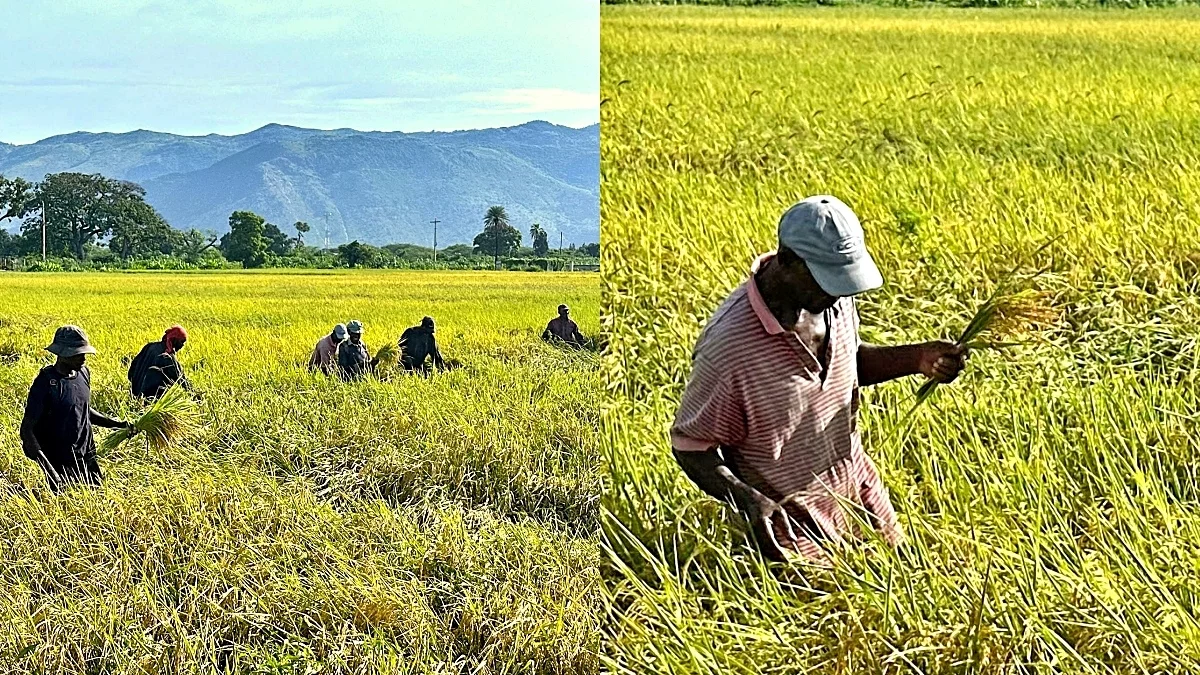
In the Artibonite region of Haiti, a critical collaboration is underway to elevate the quality of local rice production as part of the ongoing Rice Production Improvement Project. With the 2026 second growing season in full swing, the Taiwan Technical Mission (TTM) has joined forces with regional smallholder farmers to carry out a rigorous rogueing operation targeting off-type rice plants. This hands-on initiative is designed to protect the genetic integrity of improved rice seed strains, a foundational factor for boosting harvest yields and long-term agricultural productivity in one of Haiti’s most important rice-growing regions.
Agronomy specialists from TTM and local project technicians have been deployed across dedicated seed production plots to conduct systematic, plot-by-plot inspections. Trained teams are working line by line to spot and eliminate not just invasive weeds that compete with crop growth, but also any individual rice plants that do not match the genetic profile of the improved target variety. Even plants that arouse minor suspicion regarding their classification are removed immediately to eliminate any chance of unintended cross-contamination that could degrade seed quality over time.
Agricultural experts note that this level of meticulous rogueing requires exceptional precision and unwavering attention to detail. Even a small number of off-type plants left standing can lead to significant varietal mixing by harvest time, reducing the value of the harvested seed for future plantings and diluting the yield benefits of improved strains. By enforcing a zero-tolerance policy for off-types, the project aims to maintain high levels of seed purity that will deliver consistent benefits to farmers across multiple growing cycles.
Rigorous pre-harvest inspection of seed plots is widely recognized as an essential step in the production of premium-quality certified seed. For the Rice Production Improvement Project, this seasonal operation is a core component of its long-term mission to strengthen Haiti’s domestic rice sector. Through ongoing technical support and hands-on collaboration with local farming communities, the initiative continues to prioritize seed quality as a pathway to more reliable harvests, greater food security, and improved livelihoods for Haitian rice producers.