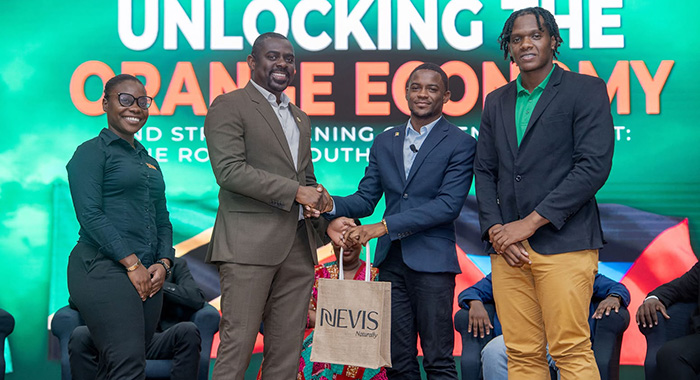
On September 24, a critical regional dialogue focused on Caribbean youth leadership and creative economic development unfolded, hosted by the St. Kitts National Youth Parliament Association. The gathering, named the Regional Youth Panel, drew young delegate representatives from four Eastern Caribbean nations: St. Kitts and Nevis, Antigua and Barbuda, Grenada, and St. Vincent and the Grenadines (SVG). Centered on the urgent, forward-looking theme “Unlocking the Orange Economy and Strengthening Civic Engagement: The Role of Youth in the Caribbean,” the event created a dedicated space for emerging leaders to trade on-the-ground insights, identify shared barriers, and propose collaborative solutions for regional progress.
Representing SVG at the panel was Omarian Dennie, president of the St. Vincent and the Grenadines National Youth Parliament Association, who brought a unique, finance-focused perspective to the discussions shaped by his professional background in banking. During his interventions, Dennie zeroed in on one of the most persistent gaps holding back the Caribbean creative sector: limited access to affordable commercial financing for independent creative professionals. He explained that too many talented young creators across the region lack the structured support to turn their artistic and cultural ideas into viable, income-generating ventures.
To address this gap, Dennie argued that foundational capacity-building is just as critical as improved access to capital. He emphasized that equipping creative workers with practical training in core business areas including business administration, financial planning and management, and strategic personal branding directly improves their ability to secure financing and build long-term sustainable enterprises. These skills, he noted, boost creatives’ creditworthiness and overall financial preparedness, making them more attractive candidates for commercial lending and investment.
Dennie also highlighted a cross-regional structural barrier that is often overlooked: the limited access to modern regional financial technology and digital monetization tools across the Eastern Caribbean. This gap, he explained, prevents the full commercialization of the creative sector, stopping creators from reaching broader regional and global markets and monetizing their work effectively. Without accessible, localized fintech solutions, even the most skilled creatives struggle to scale their operations and convert their talents into stable, long-term economic opportunities.
To overcome these interconnected challenges, Dennie called for coordinated action across governments, regional financial institutions, and youth-serving organizations. He stressed that three key changes are needed: expanding public awareness of existing support resources for young creatives, removing barriers to accessing appropriate, youth-friendly financial tools, and building sustained, supportive institutional mechanisms that help creators nurture their talents into livelihoods.
By design, the Regional Youth Panel serves as more than just a discussion forum—it is a strategic platform that elevates youth voices in regional development planning. For too long, young people’s perspectives on economic and social policy have been sidelined, but this gathering created an opportunity for emerging leaders to directly contribute to shaping the future of the Caribbean. A post-event press release emphasized that SVG’s participation in the dialogue reinforces a core truth: meaningful youth engagement is essential to developing innovative, context-appropriate approaches to development, and to building a culture of strong, inclusive civic participation across the entire Caribbean region.