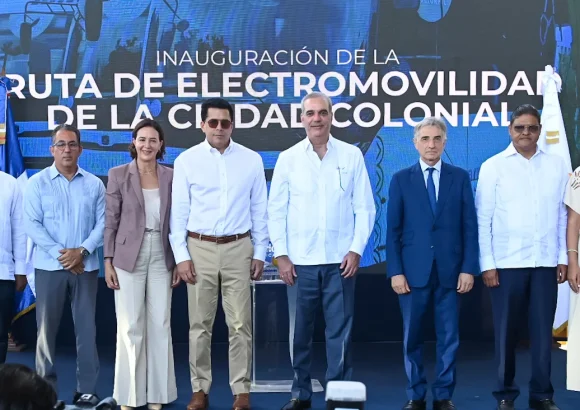
On a pivotal Monday for cultural preservation and sustainable development in the Dominican Republic, President Luis Abinader officially opened two landmark projects in Santo Domingo’s Colonial City: the fully renovated Alcázar de Colón Museum and the newly launched Colonial City Electromobility Route. These dual initiatives mark a major milestone in the ongoing, multi-partner revitalization of one of the Caribbean’s most historically significant urban districts, bringing together long-term heritage conservation goals with forward-thinking climate-friendly transportation policy.
Funded through a collaborative partnership between the Dominican government, the Inter-American Development Bank (IDB) and the European Union, the projects sit at the intersection of cultural tourism, urban renewal and climate action. During the inauguration ceremony, President Abinader emphasized that protecting the nation’s unique historical legacy is a core national priority, noting that the newly restored museum will function as more than a tourist attraction – it will serve as a dynamic educational space welcoming Dominican citizens, local students and international visitors alike.
Detailed breakdown of the museum restoration project reveals the scale of investment in the historic site. Dominican Republic’s Ministry of Tourism poured RD$100 million into core structural and restoration work, while the IDB contributed an additional US$3 million to develop cutting-edge new exhibits. Beyond the museum itself, the broader revitalization program includes planned and ongoing restoration work for dozens of other historic sites across the Colonial City, including centuries-old churches, civic buildings and underused public spaces.
For the Alcázar de Colón Museum, the renovation was far more than a cosmetic refresh. The work included comprehensive infrastructure sanitation to address longstanding structural risks, targeted archaeological research that uncovered new insights into the site’s centuries-long history, the integration of immersive digital technology to engage modern visitors, and a complete redesign of the museum’s layout and curation to enhance the overall visitor experience.
Alongside the museum reopening, authorities launched the pilot Electromobility Route, a first-of-its-kind sustainable transit system tailored to the unique needs of the Colonial City’s residents and the 1.2 million+ annual visitors that travel to the district each year. The project launched with five fully electric buses, purpose-built charging infrastructure and major upgrades to the transit yard that houses the fleet.
Total investment in the electromobility project totals more than RD$169 million, with RD$71 million contributed by the European Union and RD$98 million coming from the IDB. The 12.4-kilometer route includes 31 stops strategically placed across the district and surrounding neighborhoods: 17 stops are located within the boundaries of the Colonial City to serve major historic sites and residential areas, while 14 additional stops connect the route to other parts of Santo Domingo, improving regional connectivity.
Every bus in the new fleet is designed for universal accessibility, with a 22-passenger capacity, built-in wheelchair ramps and reserved priority seating for people with disabilities, people with reduced mobility and senior citizens. Project organizers project that the route will serve more than 40,000 residents and visitors annually, delivering a wide range of public benefits beyond improved transit access. The shift from fossil fuel-powered buses to electric vehicles is expected to cut local transport emissions, improve neighborhood air quality, reduce noise pollution in the dense historic district, and set a benchmark for energy-efficient public transit across the Caribbean.
The new service will be operated directly by the Dominican state-owned transit company OMSA, with regulatory oversight handled by the national transportation institute INTRANT. In an additional announcement during the inauguration event, Tourism Minister David Collado confirmed that the Ministry of Tourism has already approved plans to acquire five more electric buses to expand the route’s reach and capacity in the near future, responding to projected demand for the service.
Both the museum restoration and the electromobility route are core components of a larger, comprehensive 10-year development program for the Colonial City. The program’s overarching goals focus on three key pillars: restoring the district’s irreplaceable historic cultural spaces, upgrading affordable housing for long-term local residents, and expanding accessible, sustainable mobility options that benefit both the local community and the growing tourism economy.