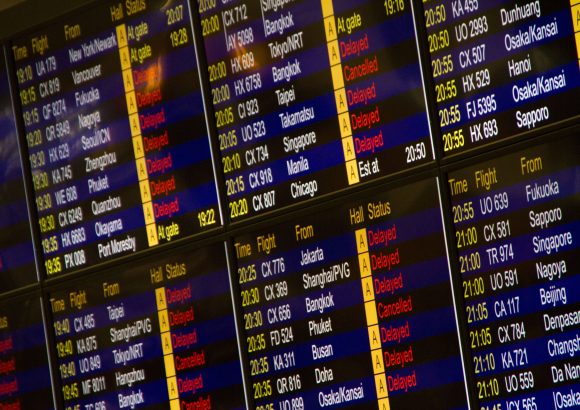
On Monday, September 21, a sudden technical breakdown at a Philadelphia, U.S. air traffic control facility triggered widespread travel disruptions for international flights connecting the United States and the Dominican Republic, with significant impacts on operations at Las Américas International Airport (AILA) located in the Dominican capital of Santo Domingo.
At minimum, six scheduled arrival and departure services at AILA were thrown off schedule, including multiple routes linking the airport to three major New York-area aviation hubs: John F. Kennedy International Airport, Newark Liberty International Airport, and LaGuardia Airport. The air traffic restrictions put in place across eastern U.S. airspace left airline operators with no choice but to either cancel flights entirely or adjust their pre-planned itineraries to adapt to the developing situation.
The unplanned disruption left scores of passengers stranded within AILA’s terminal, where they waited for hours for updated information about their disrupted travel plans. Many of those affected crowded into airline service counters to inquire about alternative flight rebooking options. While some opted to remain in the airport to wait out the outage, others chose to return to their residences or check into nearby accommodations until new departure times could be arranged.
The ripple effects of the outage also extended to family members and friends who had arrived at AILA to greet incoming passengers traveling from the United States, who were left waiting for uncertain updates on when their loved ones would arrive.
In response to the disruption, airline representatives urged all travelers impacted by the outage to keep a close eye on official communications from their carriers. They noted that a full return to normal flight operations would not be possible until the U.S. national air traffic control system fully recovered from the technical failure. Local airport authorities at AILA alongside airline operational teams have maintained continuous monitoring of the situation, aligning their next steps with guidance issued by U.S. aviation regulators.