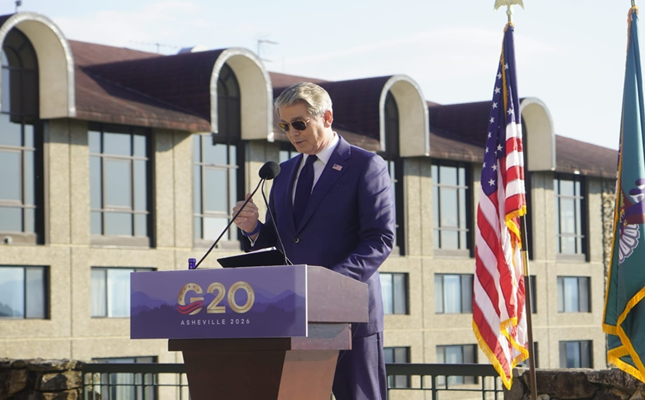
Six months into open conflict between the United States and Iran, Washington has doubled down on a two-pronged strategy of military strikes and financial isolation, aiming to push Tehran’s leadership to the negotiating table by crippling Iran’s access to the global economy. This latest escalation of tensions comes alongside expanded U.S. military operations targeting key Iranian assets, including missile launch sites and critical strategic infrastructure. In a press briefing at the White House Wednesday, U.S. President Donald Trump told reporters that American forces hold operational superiority over Iran, claiming recent U.S. airstrikes have successfully disabled Iranian radar systems and destroyed a wide range of key military infrastructure. “We hit them last night because they took a shot at us in Jordan, and we knocked all of them down,” Trump stated. In parallel to military action, the Trump administration is ramping up targeted pressure on Iran’s Islamic Revolutionary Guard Corps (IRGC), which U.S. officials identify as a core pillar of Iran’s military and national security apparatus. The broader economic pressure campaign includes sweeping new sanctions on Iranian entities and formal appeals to U.S. allies, global commercial banks, and other international financial bodies to sever all existing business ties with Tehran. The push for coordinated international action took center stage this week at the G20 finance ministers and central bank governors’ meeting held in Asheville, North Carolina. During the gathering, U.S. Treasury Secretary Scott Bessent lobbied for global collective action to cut Iran off from international capital markets and secure unimpeded navigation through the Strait of Hormuz, the strategically vital chokepoint through which nearly a fifth of global oil supplies pass daily. Bessent told attendees that even China, Iran’s largest long-standing economic partner, has publicly agreed that freedom of maritime trade through the Strait must be preserved. China has maintained robust economic ties with Iran for decades, particularly in the energy sector, and remains the top buyer of Iranian crude oil. Bessent argued that Beijing holds unique leverage to help de-escalate the conflict, noting that China can contribute through intelligence sharing, economic monitoring, and diplomatic engagement with entities that back the Iranian government. “What I can tell you is that many of our allies came forward and said we will do whatever is necessary because they understand that Iran is in an economic death throes,” Bessent said. He framed the U.S.-led economic campaign as analogous to severing a snake’s head, asserting that once Iran’s remaining productive economic capacity is sufficiently weakened, the country’s ruling leadership will have no choice but to enter negotiations. The Treasury chief also pushed back against claims that China’s continued crude purchases undermine U.S. pressure efforts. He explained that Iran currently holds some 30 million barrels of crude stored on tankers at sea, and that most Chinese purchases of Iranian oil are settled in Chinese yuan rather than globally traded hard currencies such as the U.S. dollar. In response, Washington is specifically targeting the cross-border financial channels that allow yuan earned from oil sales to be converted into other currencies and moved through regional financial systems, he said. Recent U.S. sanctions targeting global financial institutions, including a Dubai-based bank, are part of this strategy to block Iran from accessing U.S. dollars and other reserve currencies. “When that money cannot be converted to dollars, then the regime will starve,” Bessent said. While the pressure campaign is targeted at Iran, its economic ripple effects are being felt across the globe. Resumed hostilities between the two powers have already pushed international crude prices sharply higher, stoking widespread concerns over rising fuel costs and spillover impacts on consumers, businesses, and small import-dependent economies. For small island nations including St. Kitts and Nevis and other Caribbean states, spiking global energy prices translate almost immediately to higher transportation costs, more expensive electricity, and increased operating expenses across all sectors of the economy. Both the federal government in Basseterre and the Nevis Island Administration have been struggling to manage the economic fallout of these rising energy costs. Nevis Premier Mark Brantley recently acknowledged growing public discontent over surging electricity bills as the conflict enters its sixth month. Starting in June 2026, local authorities reintroduced a fuel surcharge to residential electricity customers, though the administration capped the charge 10 cents below the standard residential rate of 79 cents per kilowatt hour. Brantley noted that public reaction to the policy has been split, but admitted that the vast majority of households are already feeling the financial strain of higher electricity costs. As Washington continues to ramp up economic pressure on Tehran, the consequences of the six-month conflict extend far beyond the Middle East battlefield, leaving energy-importing nations and ordinary consumers across the globe to absorb a growing share of the economic cost.