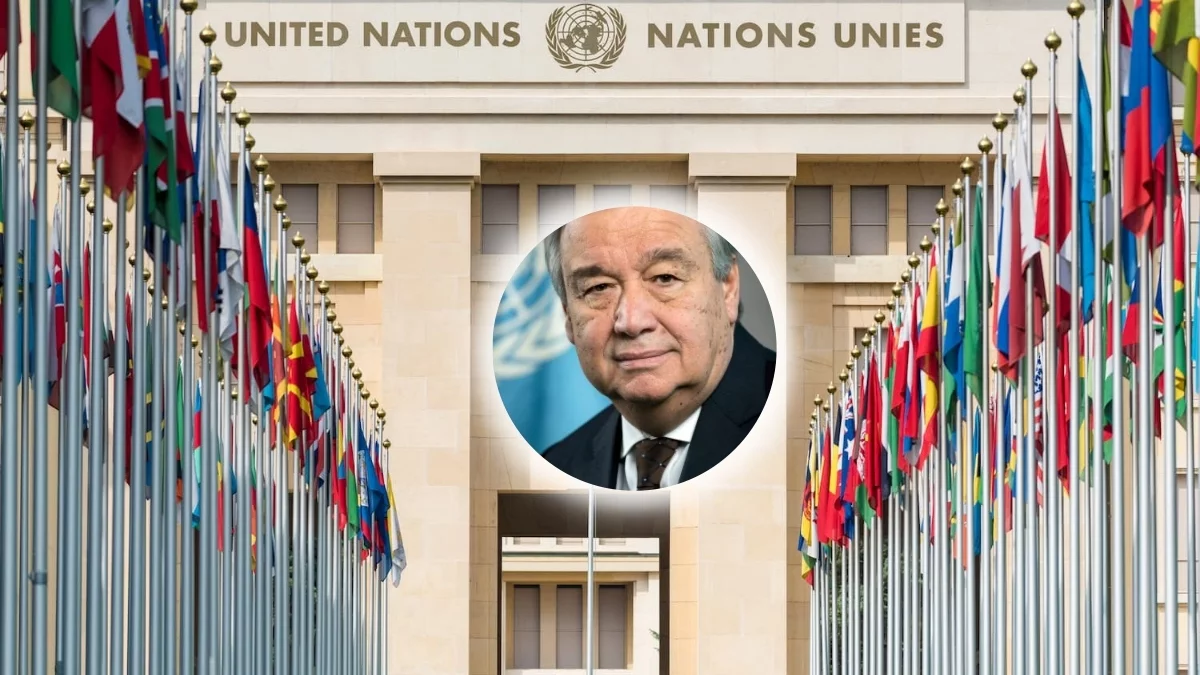
In mid-July 2026, the United Nations Integrated Office in Haiti (BINUH) submitted its latest quarterly report on the situation in Haiti to the UN Secretary-General, offering a comprehensive update on political, security, humanitarian and institutional progress across the Caribbean nation since the previous assessment in mid-April 2026. The report outlines critical milestones, ongoing challenges and unmet needs that shape Haiti’s trajectory through the first half of the year.
### Key Timeline of Major Developments
The quarter was marked by several high-profile diplomatic and institutional events. On May 16, UN Secretary-General made an official visit to Haiti, during which he issued a urgent call for expanded international backing for the country, reaffirming the global body’s commitment to sustaining a Haitian-led political process that addresses the nation’s longstanding crises. Eleven days later, on May 27, Haitian authorities inaugurated new Specialized Judicial Hubs focused on prosecuting mass atrocities, sexual violence and financial corruption — a key step toward strengthening the country’s fractured rule of law framework. On June 1, aligned with the timeline mandated by UN Security Council Resolution 2793 (2025), the new United Nations Support Office in Haiti was formally established, and the country’s multinational Anti-Gang Force officially launched operational activities to curb widespread gang violence.
### Progress on Political Dialogue and Electoral Preparation
Over the review period, Haitian stakeholders and UN partners made steady progress laying groundwork for upcoming elections, starting with reaching a formal agreement on an electoral budget. From May 28 to 30, an international conference focused on refining the electoral framework was hosted in partnership with the State University of Haiti, bringing together global and local stakeholders to align on process standards. Inclusive consultations were also prioritized: private sector representatives met with organizers on April 16, followed by sessions with a broad range of civil society groups including women’s organizations, religious communities and media outlets on April 27.
Public outreach efforts have also expanded: voter awareness sessions for first-time eligible voters were held in Port-au-Prince on June 2, Cap-Haïtien on June 18, and Les Cayes on June 23. To support fair and peaceful media coverage of the electoral cycle, training programs were rolled out for hundreds of journalists: 369 reporters across five Haitian departments received training backed by the UN Peacebuilding Fund and the Office of the High Commissioner for Human Rights (OHCHR), while a local media association supported additional training for 200 online journalists based in Haiti and in the Haitian diaspora between April and June.
Parallel to electoral preparations, stakeholders advanced planning for a national Disarmament, Demobilization, and Reintegration (DDR) program, holding consultations with national institutions and civil society groups between April 2 and 27 to secure the international funding and technical support needed to launch the initiative.
### Security, Rule of Law and Human Rights: Mixed Progress Amid Persistent Crisis
The report documents uneven progress on security and human rights across the country. Partial state presence has been restored in the key municipalities of Delmas and Port-au-Prince, as well as at multiple institutional sites surrounding Port-au-Prince’s Champ de Mars, following security operations by the newly launched Anti-Gang Force. However, violence has intensified in the Artibonite and Centre departments, and gang activity has expanded into Haiti’s Southeast region. Deadly gang clashes continue to disrupt communities in La Plaine du Cul-de-Sac, encompassing the Cité-Soleil and Croix-des-Bouquets areas. Between March 1 and May 31 alone, 825 cases of sexual violence were documented by monitors, 84% of which were perpetrated by gangs as a tactic of control and intimidation.
In the justice and prison sector, systemic overcrowding and prolonged pretrial detention remain acute crises. On May 28, BINUH supported a criminal justice monitoring committee in convening 26 key institutional stakeholders to address the growing problem of extended pretrial detainment. As of June 30, official prison statistics recorded a total inmate population of 7,563, including 413 women, 263 minor boys and 20 minor girls. The system is operating at 313% of its designed capacity, and 82% of all incarcerated people are being held without a conviction, highlighting deep systemic failures in Haiti’s judicial process.
On the human rights front, accountability and capacity building efforts moved forward: in April, 40 allegations of potential summary executions by Haitian National Police officers were referred to the General Inspectorate of the Haitian National Police (IGPNH) for investigation. Between April and May, 149 civil society representatives across eight departments received training on data collection methods to support anti-corruption efforts. From May to June, more than 1,300 officers and 30 commanders of specialized Haitian National Police anti-gang units completed human rights and operational training. All 270 members of the new Anti-Gang Force received specialized training on child protection and the prevention of sexual exploitation and abuse. Peacebuilding and integrity education programs, supported by the Peacebuilding Fund, continued operating in 15 primary and secondary schools across Port-au-Prince.
### Dire Humanitarian Crisis With Severe Underfunding
The report confirms that Haiti’s humanitarian crisis remains one of the most severe in the world, with 6.4 million people — half of the country’s total population — in need of life-saving humanitarian assistance. As of mid-2026, 1.47 million Haitians are internally displaced by violence, representing 12% of the national population. Funding for the 2026 humanitarian response plan remains critically low: as of June 15, only 25% of the total $880.3 million required has been secured, leaving aid organizations unable to scale up life-saving support for vulnerable communities across the country.