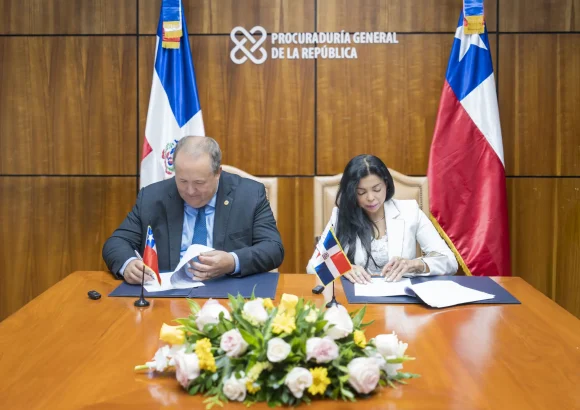
In a historic step toward confronting global organized criminal activity, the Dominican Republic and Chile have formalized a partnership to create a specialized joint investigation unit focused on cracking down on human trafficking, migrant smuggling, money laundering and a range of other cross-border criminal enterprises. The landmark agreement was signed this week in Santo Domingo by Dominican Attorney General Yeni Berenice Reynoso and Chilean National Prosecutor Ángel Valencia Vásquez, both of whom emphasized that deeper cross-border collaboration is critical to dismantling sprawling, networked criminal groups that operate beyond individual national jurisdictions.
Officials from the Dominican Attorney General’s Office confirmed that this agreement marks the first time the Caribbean nation has established such a joint investigation body in full alignment with the terms of the United Nations Palermo Convention against Transnational Organized Crime, the global framework guiding international cooperation against transnational criminal activity.
Reynoso outlined that the new partnership strengthens the Dominican Public Prosecutor’s long-running strategy to combat human trafficking, which she characterized as a contemporary form of slavery. The initiative builds on existing coordination between multiple Dominican domestic institutions, including the Ministry of Foreign Affairs, General Directorate of Migration, National Intelligence Directorate and Ministry of Defense. She added that investigative teams from both countries had already been working together informally for some time ahead of the formal signing of the agreement, laying a solid foundation for future coordinated action.
For his part, Valencia explained that the pact creates a clear, practical operating framework that allows prosecutors and law enforcement officers from both nations to work side-by-side on investigations, share real-time intelligence and exchange proven law enforcement best practices. These coordinated efforts, he noted, will significantly boost both countries’ capacity to break apart criminal organizations that profit from human trafficking and the smuggling of irregular migrants.
The agreement, which will remain in force for an initial one-year term, also expands cooperation to cover linked criminal activities including money laundering, public corruption and various economic crimes tied to transnational organized networks. Under the terms of the pact, authorities from both countries will coordinate investigation planning, exchange sensitive information and evidence, track down and prosecute criminal ringleaders and other offenders, seize assets gained through illegal activity, and prioritize the safety and support of victims of human trafficking throughout all investigative and judicial processes.