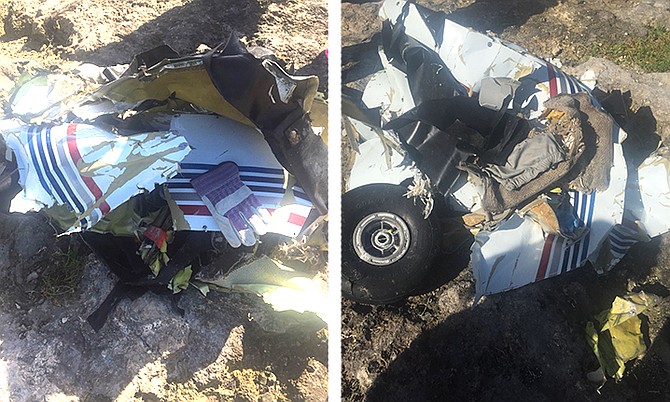
For Kermit Adderley Jr., the pain of losing his mother in a 2018 North Andros plane crash never fully faded. Now, a second deadly aviation disaster on the same stretch of the Bahamian island has not only resurrected devastating old memories – it has reinforced a devastating truth: the systemic gaps that turned his family’s grief into an agonizing six-month wait to bury his mother have never been fixed.
In January 2018, Margaret Adderley was one of six people killed when their Piper Aztec aircraft, en route from North Andros to New Providence, crashed into the ocean. All passengers and crew on board died. More than eight years later, critical questions surrounding the tragedy – including whether the aircraft carried valid insurance – remain unanswered for the Adderley family. To make matters worse, the family was forced to wait nearly six months to lay Margaret to rest, held up by crippling delays in receiving DNA forensic testing results needed to formally identify her remains. Adderley, a 39-year-old licensed customs broker, says even his mother, who was among the first victims to be identified, faced an interminable wait; other families affected by the 2018 crash waited far longer.
That prolonged uncertainty inflicted lasting damage on his family, Adderley says. As they tried to rebuild a sense of normalcy and return to daily routines, repeated delays kept reopening their emotional wounds. Adderley’s younger brother, a teenager at the time of the crash, withdrew deeply into himself as he struggled to process the loss and the endless wait. Even now, years later, Adderley’s young daughter still asks for answers about what happened to her grandmother.
On July 10, Independence Day in the Bahamas, that nightmare repeated itself: another small plane crashed near San Andros Airport on North Andros, killing all 10 people on board. The lone survivor pulled from the burned wreckage, Macaro Rolle – who is related to Adderley’s wife – later succumbed to his injuries. Adderley says when news of the crash broke during a family gathering, the room fell instantly silent and numb. For his family, who already knew the weight of this kind of tragedy, the impact was immediate. Multiple relatives, including some of his aunts, were so shaken they had to sit down to recover their composure.
Worse still, the same failure that prolonged Adderley’s grief is already repeating itself for the 10 newly affected families. Relatives of the latest victims have been told they face an eight-week wait for DNA testing results before they can identify and bury their loved ones, whose bodies were severely burned in the crash.
Adderley says that wait is almost certain to stretch far longer than eight weeks – a timeline he knows from firsthand experience. “I feel for them, but I’ve already lived that. I wouldn’t allow the government to tell me six to eight weeks because I know firsthand it takes longer than that,” he said.
At the root of the ongoing crisis, Adderley argues, is the Bahamas’ continued reliance on overseas forensic laboratories to conduct critical DNA testing, a policy he calls “kind of crazy.” For years, he says, governments have poured funding into other priorities, while neglecting to invest in a fully functional national forensic lab that could cut down on wait times for grieving families. It is only after major tragedies that policymakers acknowledge the urgent need for reform, Adderley says, and no meaningful change ever comes between disasters. “It’s disappointing to know that you now have ten families who have to go through the same process again. It’s not until tragedies like this happen that there’s a cry or need for better solution to the problems that we face as the people,” he said.
Air accident investigators ultimately concluded the 2018 crash was caused by pilot error, citing the pilot’s limited qualifications and inexperience, combined with poor weather conditions, as the key contributing factors. But that official finding has not filled the gap of unanswered questions for the Adderley family, who have gotten little closure eight years on. “Nothing came out of the crash other than a death,” Adderley said. “No answers.”
Beyond pushing for a domestic forensic lab, Adderley is calling on the Bahamian government to introduce emergency financial support for families left bereaved by sudden disasters like plane crashes. Funeral costs impose a heavy, unexpected burden on families already reeling from grief, he notes, and even small targeted assistance would make a major difference. Adderley says his own family was able to absorb the costs, but if his mother had been the sole breadwinner, their situation would have been far direr. Even modest compensation to help offset end-of-life expenses, he argues, would offer a small measure of support to families at their most vulnerable.
Adderley’s message to the newly affected families is one of solidarity, but he holds out little hope for a quick resolution to their ordeal. “You hear all kind of things when you find yourselves in that situation but I just ask that those families, they just stick together and try to get some type of clarity and resolution but it’s not going to come now. The release is not going to come now.”