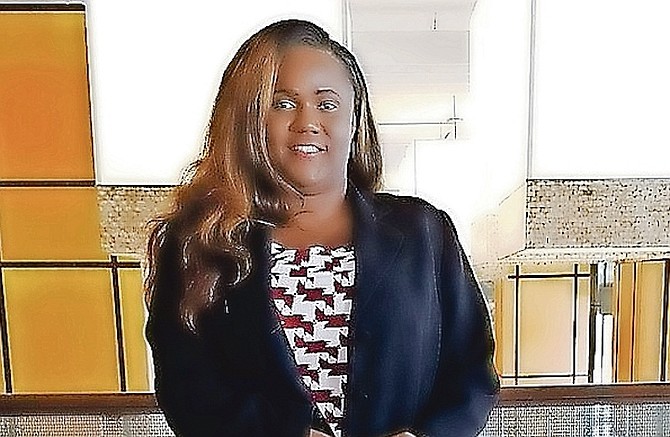
A growing rift has emerged over LGBTQ+ safety and justice in The Bahamas, as prominent gay rights advocate Alexis DeMarco is pushing urgently for dedicated hate crime legislation, linking a series of recent and decades-old unsolved killings of presumed LGBTQ+ community members to systemic bias and gaps in the country’s legal framework. The push has been met with outright rejection from Attorney General Wayne Munroe, who maintains existing laws are sufficient and says no evidence has been presented to prove any murders in the nation have been driven by anti-LGBTQ+ prejudice.
DeMarco’s call for reform centers on two high-profile fatalities recorded so far this year. The most recent came in mid-July, when the body of a 63-year-old man was discovered inside a burning duplex in Nassau Village’s Lee Street. First responders entered the structure shortly after 2 a.m. responding to reports of the fire and found the man unresponsive near the front entrance; subsequent investigation revealed he had suffered multiple stab wounds, prompting a homicide inquiry and an ordered autopsy to confirm the official cause of death. The second case dates back to January 14, when a 38-year-old man was found stabbed to death in his Daffodil Avenue residence after a concerned colleague requested a welfare check when they could not reach him. Authorities confirmed the victim sustained stab wounds to his upper body, noting the killing came almost three years after he survived a non-fatal shooting that led to an attempted murder and firearms charge against another suspect. To date, police have not announced any confirmed motive for either killing, nor ruled that either death qualifies as a hate crime – a reality DeMarco argues is part of the problem.
Without formal legislation that explicitly recognizes bias-motivated offenses, DeMarco argues, law enforcement and justice system officials lack the structure to properly identify, track, and prosecute hate-fueled violence targeting marginalized groups. For years, she says, LGBTQ+ Bahamians have harbored deep-seated fears that violence against their community members is not investigated or prosecuted with the same urgency or gravity as violence against cisgender, heterosexual people.
“When perpetrators of violence against LGBTQ+ people walk away with convictions for far lesser offenses instead of facing murder charges, our community is left wondering whether embedded prejudice and harmful stereotypes continue to shape how justice is pursued,” DeMarco explained.
She pointed to a decades-old landmark case to back up her concerns: the 2010 prosecution of Latherio Jones, who initially faced a murder charge for fatally shooting Trevor Wilson, but ultimately was convicted of the lesser offense of manslaughter on grounds of provocation. The court heard during the trial that Wilson had made repeated same-sex advances toward Jones. Prosecutors with the Crown appealed the verdict, arguing the sentence was unduly lenient, noting that Jones had armed himself, traveled to Wilson’s room, and shot him in the head following what prosecutors described as a second advance. The Court of Appeal ultimately dismissed the appeal and upheld the manslaughter conviction. Delivering the court’s oral ruling, then-president Dame Joan Sawyer stated that “One is entitled to use whatever force is necessary to prevent oneself being the victim of a homosexual act.”
DeMarco stressed that this ruling, paired with the legal defense widely known internationally as the “gay panic” defense, has amplified community fears that violence against LGBTQ+ people can be minimized or even justified through bias and harmful stereotypes.
Beyond the two 2024 cases, DeMarco also highlighted a long list of unsolved killings dating back more than two decades that targeted people believed to be part of the Bahamas’ LGBTQ+ community. The list includes: police officer Kevin Williams, killed in 2001; lecturer Thaddeus McDonald and celebrated fashion designer Harl Taylor, both killed in 2007; HIV/AIDS activist Wellington Solomon Adderley, Jamaican waiter Marvin Wilson and dancer Paul Whylly, killed in 2008; photographer Sharvado Simmons in 2011; and waiter Elkin Moss in 2013. None of these cases have resulted in convictions, leaving families and community members without closure.
In response to DeMarco’s demands, Attorney General Munroe pushed back firmly during a public statement this week, arguing that a separate, standalone hate crime legal framework is unnecessary to protect LGBTQ+ Bahamians. He emphasized that existing homicide laws apply equally to all victims, regardless of their identity or sexual orientation. “From all of the briefings I got, I didn’t get anything that appeared hate crime related,” Munroe said.
He further explained that murder charges are only reduced to manslaughter in cases where established legal principles impact an accused person’s criminal liability, most commonly in instances involving diminished mental responsibility. To illustrate his point, he cited a past case he handled where a woman who set her abuser on fire, an intentional killing that was reduced to manslaughter due to long-term mental abuse in an intimate partner violence context. “Murders that get reduced to manslaughter are generally if you have anything that has a mental element,” he said.
Munroe added that throughout his entire career working at the Bar, he has never encountered a murder he believed was motivated by hatred of a person’s sexual orientation or race. “I have not heard in all of my time at the bar of any hate crime-related murder where somebody is murdered because they are gay or because they are black,” he said. “I’ve not. I’ve seen a lot of personal, intimate partner violence. But the intimate partner violence has nothing to do with your sexual orientation or your sexual preference. It has everything to do with the nature of the interpersonal relationship.”
For DeMarco and other LGBTQ+ advocates, however, the string of unsolved deaths and the history of lenient rulings in anti-LGBTQ+ violence cases makes clear that change is long overdue. The disagreement highlights a broader ongoing debate over equal justice for marginalized communities in the Caribbean nation, with advocates warning that without formal legal recognition of hate crimes, bias-motivated violence will continue to go unaddressed.