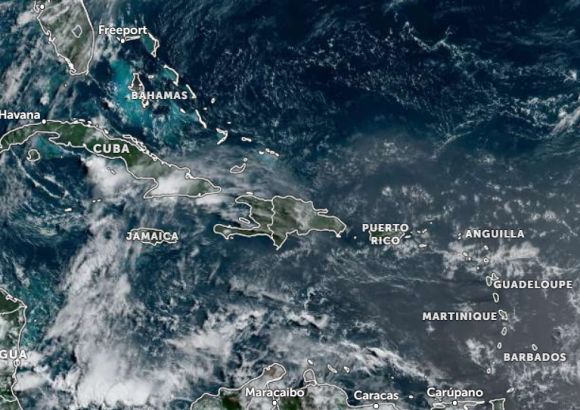
Against the backdrop of shifting global climate patterns, climate scientists and meteorological bodies have issued a clear call to action for the Dominican Republic: the nation must brace for overlapping extreme weather threats tied to El Niño during the 2026 Atlantic hurricane season. Unlike typical hurricane season outlooks, this year’s forecast brings a contradictory mix of conditions: suppressed overall tropical cyclone activity paired with elevated risks of prolonged drought and record-high temperatures across the wider Caribbean basin.
El Niño, a climate phenomenon driven by anomalous warming of surface waters in the central and eastern Pacific Ocean, is known to reshape global atmospheric circulation by shifting warm air masses toward the Caribbean. For the region, this shift consistently delivers two key outcomes: it creates unfavorable atmospheric conditions that dampen tropical cyclone formation, and it amplifies the risk of extended dry spells and above-average seasonal temperatures. Even with the projected dip in total storm numbers, meteorologists stress that reduced activity does not equal zero risk – major, destructive hurricanes can still form and impact coastal Caribbean nations including the Dominican Republic.
The 2026 Atlantic hurricane season, which officially spans from June 1 to November 30, is currently forecast to produce between 8 and 14 named storms. Of these, 3 to 6 are expected to strengthen into hurricanes, with 1 to 3 reaching major hurricane strength (Category 3 or higher on the Saffir-Simpson scale). If the forecast holds, 2026 will mark the second consecutive below-normal Atlantic hurricane season, following 2025’s 13-storm season that also fell short of the long-term historical average.
In response to the forecast, Dominican authorities have already formally activated the national 2026 Cyclone Season Contingency Plan during an official launch event hosted at the country’s Emergency Operations Center (COE), with President Luis Abinader in attendance. During the event, President Abinader underscored that even the most current projections do not rule out the development of powerful, destructive storms, and called for fully coordinated preparedness across every level of government and public institution.
Abinader also announced upcoming scheduled meetings with the national Governing Council and local municipal authorities to refine and reinforce community-level prevention strategies. He emphasized that preparedness efforts must extend beyond hurricane response to address the full suite of El Niño and climate change-driven hazards, including extreme heat events, episodic intense rainfall, and prolonged regional drought.
As part of the contingency plan rollout, national agencies conducted a full-scale simulation of a Category 4 hurricane landfall response. During the exercise, President Abinader issued a formal directive requiring all state institutions to make their resources fully available to emergency response teams. He also publicly recognized and commended the pre-season preparedness work carried out by the Emergency Operations Center, the Dominican Institute of Meteorology (Indomet), and national civil protection agencies.
International climate projections, including updated analysis from the U.S. National Oceanic and Atmospheric Administration (NOAA), indicate that the ongoing El Niño event is likely to intensify in the coming months, with a 63% probability of it strengthening to a “very strong” classification between November 2026 and January 2027. A very strong El Niño would exacerbate existing rainfall deficits and prolong periods of extreme heat across the entire Caribbean region.
These international warnings have been echoed by Dominican meteorological experts, who note that El Niño’s typical impacts in the country include reduced seasonal precipitation and a sharp increase in the likelihood of widespread meteorological drought, particularly during the second half of 2026 and the early months of 2027. Local experts have urged both the general public and key economic sectors, including agriculture and tourism, to embed a permanent culture of prevention to mitigate potential losses.
Beyond emergency response planning, the Dominican government has already begun rolling out targeted preventive measures to address projected water shortages. National water authorities confirmed that preliminary water rationing protocols have already been implemented in at-risk regions to pre-empt supply shortfalls, while the interagency Water and Construction Committee continues to hold weekly coordination meetings to monitor conditions and adjust strategies as needed.
Data from the National Institute of Hydraulic Resources (INDRHI) shows that the country’s major strategic dams currently hold approximately 73% of their total capacity, a level that provides stable water supplies for the near term. However, senior water resource officials warn that storage levels could drop rapidly if prolonged dry conditions take hold across the country in the coming months.
As the Dominican Republic moves into the peak months of the 2026 hurricane season under El Niño conditions, national authorities continue to stress that proactive preparedness remains non-negotiable. The nation faces a unique balancing act: while the odds favor fewer named storms than average, the overlapping risks of major hurricane landfall, extreme heat, and worsening drought mean that constant vigilance and coordinated preparation remain critical to protecting communities and critical infrastructure.