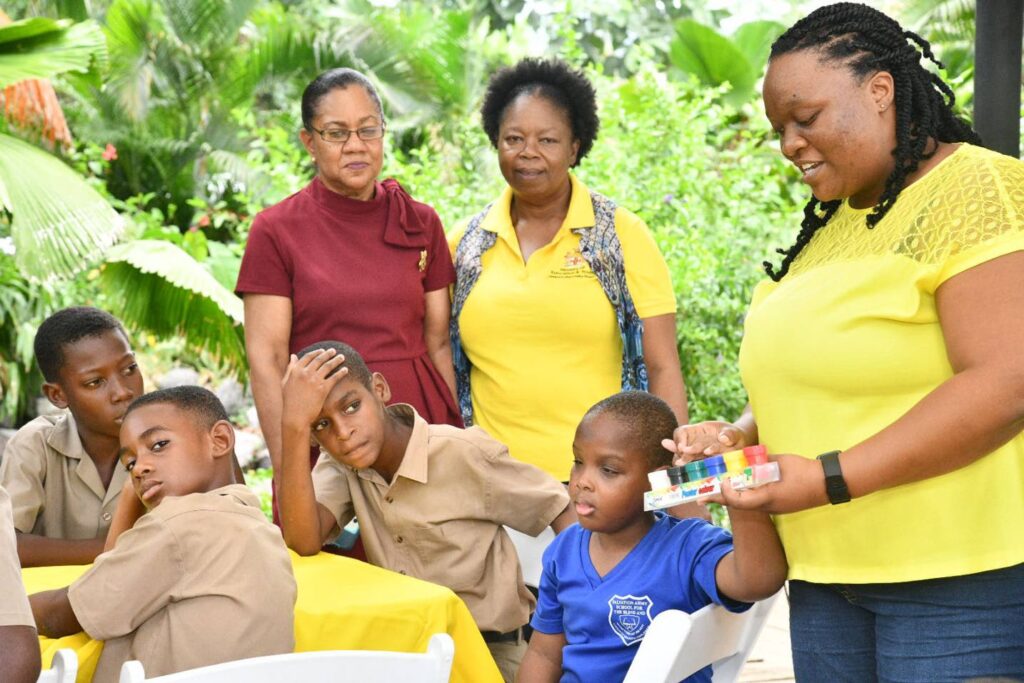
As part of Jamaica’s annual Child Month celebrations, Jamaica’s Ministry of Education, Skills, Youth and Information hosted a landmark inclusive gathering on Thursday, creating a judgment-free, supportive space where children with special needs across the Corporate Area could share their experiences and build connections. The event, held on the scenic lawns of Devon House in St. Andrew, brought together students from five specialized institutions across the country: the Salvation Army School for the Blind, Danny Williams School for the Deaf, Carberry Court School of Special Education, Randolph Lopez School of Hope, and Hope Valley Experimental School. This gathering formed a core component of the ministry’s groundbreaking Child Conversations initiative, which centers underrepresented youth voices in public policy and community programming. Centered on the urgent theme “Prioritising our children’s mental health, stronger minds, safer future”, the event also broke new ground by pairing students with disabilities with neurotypical, able-bodied peers, creating structured opportunities for cross-group dialogue and mutual understanding. Hyacinth Blair, senior director for Children’s Affairs and Policy at the ministry, explained the core goals of the initiative in an interview with the Jamaica Observer, emphasizing the critical, often overlooked role of mental wellness in overall child development. Blair stressed that the event sought to demystify mental health for young Jamaicans, pushing back against harmful societal stigmas that frame discussions of emotional struggle as a sign of dysfunction. “We want our children to understand that it’s okay to be sad about things. It’s okay to talk about things. Mental wellness doesn’t mean that you are mad, so to speak. We want them to understand that as much as it is important to be physically well and emotionally well, mentally well is also a part of it,” Blair told the outlet. Blair pointed out that children without disabilities often lack exposure to peers with special needs, leading to unintended insensitivity and even open bullying. By bringing both groups together for open conversation, the initiative aims to foster lasting empathy and allyship among young people. “We have paired them with able-bodied peers, and we want conversations so that there is a greater level of understanding between children who do not have challenges and our special needs children so we can have more collaboration, more understanding,” Blair said. “Children can be really cruel. You may see a child with special needs and another child will want to tease them. So we want them to understand each other more, to talk more. And so with a greater level of understanding, you as a child who does not share the same challenge, you may be in a crowd with other students, and because you were exposed to that child or that special need, you can be able to say to your peers, ‘Don’t do that’ or ‘Don’t say that.’” Blair also highlighted a troubling gap in support systems for disabled children: global and local research confirms that children with special needs face a drastically higher risk of abuse and mental health struggles than their peers, in large part because societal stigma has long pushed conversations about youth mental health into the shadows. Compounding this risk, many disabled children face communication barriers that leave them unable to report harm or access existing support services. “It’s probably greater among them because sometimes we don’t remember them as we ought to. And sometimes they can’t articulate their challenges or their problems as well as the other child because of the issue that they may have,” Blair explained. “There was a time when we would not talk about mental health. It’s something that we keep in the closet, but we understand now that in order to develop strong minds and to have a safer future for our country, then our children need to be mentally well. One of the ways really is to be able to express yourself, to talk about the things that are bothering you, and to find solutions. To feel safe in expressing themselves. We want it to become a normal part of life.” Blair used the 211 national child abuse reporting hotline as an example of a critical service that fails disabled youth: children with speech or hearing impairments often cannot access the phone-based hotline, leaving them with no safe way to report harm. This gap, she argued, underscores the urgent need to develop alternative, accessible communication channels that meet the unique needs of disabled children. “If a child doesn’t speak well, doesn’t hear well, then it’s hard for them to articulate how it is they’re feeling,” she noted. The initiative has already earned widespread praise from educators at specialized schools, who have long called for more targeted support for disabled students’ mental health. Sashoir Murphy Hewitt, a teacher at the Danny Williams School for the Deaf, welcomed the event as a long-overdue step to address the isolation many deaf students face in Jamaica. “I think the initiative will be very beneficial, especially to the deaf students, because Jamaican Sign Language is not a language that is publicly known, and that is their first language, so many time they don’t have persons to communicate with or who understand them or who they feel comfortable to share whatever they are going through,” Murphy Hewitt said.