In Kingston, Jamaica, a community-focused swimming initiative is transforming opportunities for dozens of young students across four local primary and basic schools, blending water safety education with long-term career preparation to empower youth from diverse backgrounds.
Last Thursday, the Progress Learn to Swim Classes (PLSC) held its fourth annual development swim meet at the University of the West Indies Mona Swimming Pool, a showcase designed to highlight the growth and skills built by participants from New Hope Preparatory, St Jude’s Primary, Panton’s Home School, and Bethel Basic School.
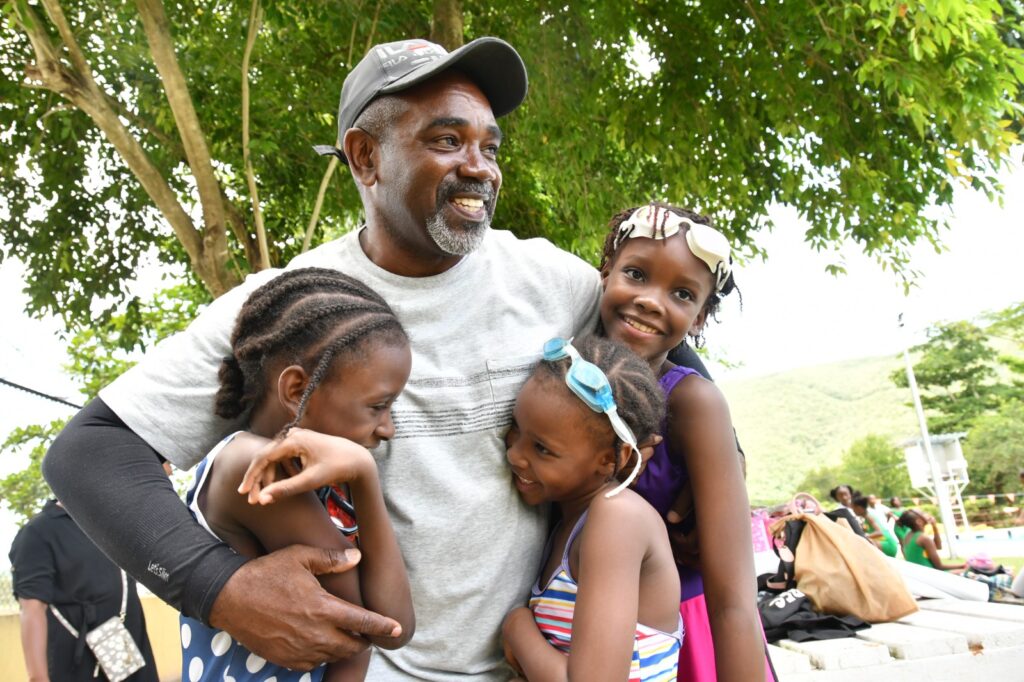
The atmosphere across the venue was electric throughout the day. Young competitors splashed through the pool lanes, laughed between events, and bounded around the pool deck, drawing loud cheers from crowds of parents, teachers, and supporters gathered along the sidelines. Unlike traditional competitive swim events, the meet centered inclusive, age-appropriate activities, ranging from fun object-find challenges and paddle boat races to structured freestyle races that let students of all skill levels test their abilities.
For PLSC programme coordinator Ainsworth Reid, the annual showcase is far more than a chance for children to show off their new skills—it is a key milestone in the initiative’s core mission: building life-changing skills from early childhood that open long-term economic opportunities.
“The intention is really to create life skill from early,” Reid explained, outlining the programme’s pipeline model: it introduces swimming to children starting at the basic school level, supports their development through primary and secondary school, and ultimately equips advanced participants with the training to work as swimming instructors or certified lifeguards, even supporting pathways to self-employment. “The sport of swimming carries within itself the opportunity for jobs so we want to kind of bring it from the basic school level all the way through to the high school and beyond,” he added, noting his upcoming goal to expand the programme into five Jamaican high schools.
Reid framed this fourth staging as clear proof of the programme’s steady growth. While lower full-capacity turnout due to conflicting community events created a small setback, he emphasized that participation levels still marked a noticeable increase from previous years.
For parents and educators, the impact of the initiative has already been deeply meaningful. Laytoya Rowe, a parent whose daughter Amia Bell of New Hope Preparatory competed, shared that watching her child participate was one of her most joyful recent moments. Though Rowe herself never learned to swim, she has prioritized making sure her child gains the critical skill, echoing the programme’s focus on long-term safety and empowerment.
Justina Woodstock, a teacher at New Hope Preparatory, echoed that excitement, noting that students have committed to weekly practice sessions at the National Stadium for months ahead of the meet. “They have worked hard. Every Friday they are at the National Stadium practicing and to see them now in action is just a joy,” she said.
St Jude’s Primary turned out one of the largest groups for the event, with 25 students and six parents in attendance. Teacher Tishana Downer shared that she entered the meet full confidence in her students’ preparation.
The event also drew interest from secondary education leaders looking to replicate the programme’s success. Rohan Gray, Acting Vice Principal of Edith Dalton High School, attended the meet to observe the initiative’s model, noting that it could fill a critical need for his students, many of whom come from low socio-economic backgrounds. “What I have seen so far is very encouraging and I see where at my school this could actually help our boys to be disciplined and rounded,” Gray said, adding that swimming training would not only build personal discipline but also create accessible career pathways for his students after graduation.
When the day’s events wrapped up, St Jude’s Primary claimed the overall championship title with 245 total points, followed by Panton’s Home School in second place with 180 points, and New Hope Preparatory in third with 160 points. Even Bethel Basic School students, who participated unofficially in the event, were recognized for their participation alongside all other competitors. Every student took home a certificate of participation to mark their achievement, while each competing school received a trophy for their overall placement, capping a day of growth, community, and celebration for the growing initiative.